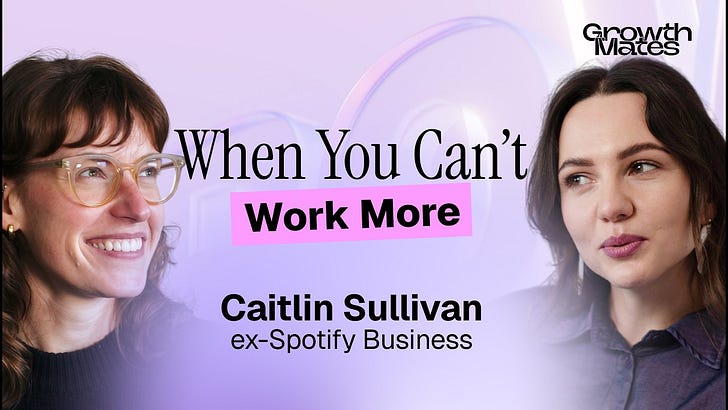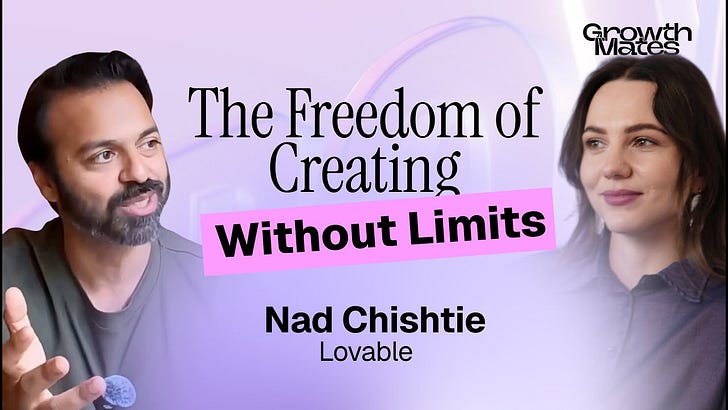

When I started working on this season of Growthmates The Creator’s Path — I was interested in something specific. Not just creators who built startups or personal brands, but people who managed to build meaningful creative work while still operating inside traditional roles.
People who did not necessarily quit their jobs to become creators and who found ways to integrate creativity into their existing lives. My conversation with Catt Small was exactly about that.
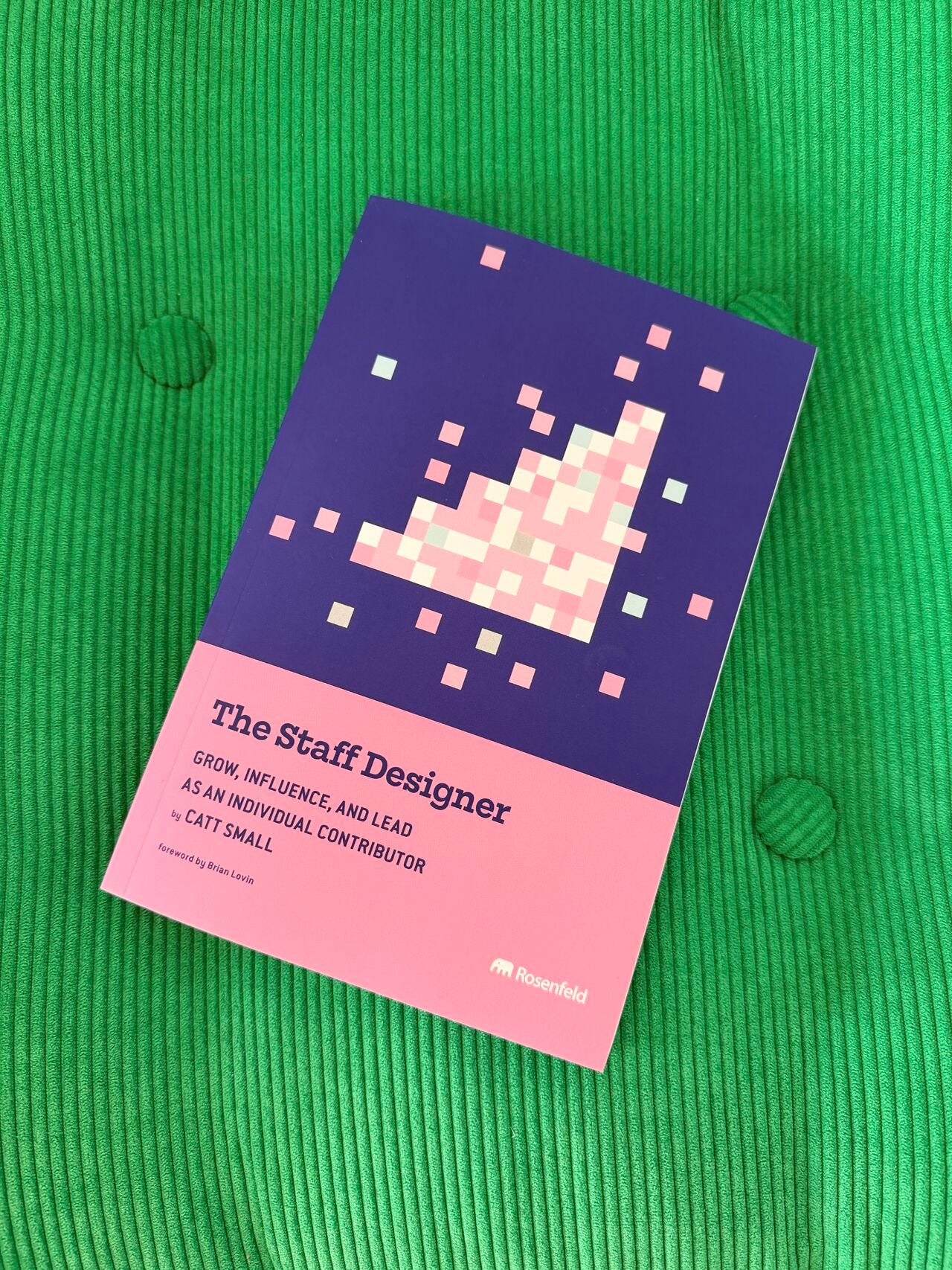
Catt is a Staff Designer at Dropbox, the author of the book The Staff Designer, a writer, teacher, and indie game developer. But what stood out to me most in our conversation was not the number of things she does. It was the way she approaches creativity.
Very early in the episode she explained something simple that shaped the entire conversation: creativity does not appear from nowhere. It requires space, structure, and consistency. And sometimes, it starts with something as mundane as a calendar.
Brought to you by:

This episode is supported by tools I genuinely use and recommend:
Mobbin — the largest UX & UI reference library for deep product inspiration.
Obi by Cor— AI-powered onboarding voice assistant, I truly recommend.
Listen on YouTube, Spotify, and Apple Podcasts
Welcome to the season of Growthmates — The Creator’s Path
This episode of Growthmates — The Creator’s Path is about people who treat creativity as something that can be intentionally developed, not something that appears by accident.
I was looking for people who build ideas in public, test concepts before committing to them, and gradually turn side explorations into something meaningful. Catt’s story fits that pattern remarkably well.
Today many people know her as the author of The Staff Designer, a book that explores the path of senior individual contributors in design. But the book did not begin as a book project. It emerged from years of writing, teaching, and sharing ideas online.
Before publishing anything formally, Catt spent a long time writing blog posts on her personal website. She used writing as a way to clarify her thinking about design, collaboration, and career development.
Over time those ideas started resonating with the design community. Eventually she became involved with Rosenfeld Media, first as part of their editorial board reviewing book proposals.
Writing a book in 10–20 minutes a day
One of the questions I hear most often from people who want to create something is simple: how do you find the time?
Catt’s answer is surprisingly practical. She does not wait for large blocks of inspiration. Instead, she builds small routines that allow creative work to exist alongside everything else in life. At one point in our conversation she explained:
“The first thing I’ve always done pretty well is having a strong relationship with my calendar”
Catt Small (Dropbox)
Rather than hoping time would appear, she scheduled small writing sessions. Most days those sessions lasted only 10 to 20 minutes. That may not sound like much. But over time those small daily efforts accumulated into a manuscript. The book was written gradually, over about nine months, in small increments that fit around her full-time work.
The process was not dramatic. It was consistent and that consistency made the project possible.
Testing ideas before writing the book
Another part of Catt’s story that fascinated me was how she approached the book itself. Instead of starting with a manuscript immediately, she first tested the topic through teaching.
She created a course about the Staff Designer role and ran it online. The response surprised her. Hundreds of people filled out the course survey and dozens joined the program.

That signal mattered. The class helped her understand which topics resonated most, what questions people struggled with, and which frameworks were actually useful in practice. Those insights eventually shaped the structure of the book.
Teaching also gave her something invaluable: direct feedback from practitioners.
Many of the questions students asked during the course later became entire sections of the book. In that sense, the book was not written in isolation. It evolved through conversation with a community of designers navigating similar challenges.
Why perfectionism blocks creators
At some point in the conversation we began discussing something many creators struggle with: perfectionism. Catt knows that feeling well. The pressure to publish something polished can easily delay creative work indefinitely.
Her way of dealing with that pressure is surprisingly simple. She often asks herself a straightforward question: what is the worst thing that could happen if I share this?
Most of the time the answer is not catastrophic. You might receive feedback. You might discover that an idea needs refinement.
But the alternative — never sharing anything is far worse. During the episode she reflected on that tension in a very honest way. She would rather try something and learn from the experience than spend years wondering whether the idea could have worked. For creators, momentum often matters more than perfection.
Creative work inside a full-time career
Another topic we explored was the relationship between creative projects and full-time work. Many people assume they need to quit their job in order to build something meaningful. Catt took a different approach.
She wrote her book while continuing to work full-time at Dropbox. That required clear boundaries and transparency with her employer. Most of the writing happened outside working hours, usually early in the morning.
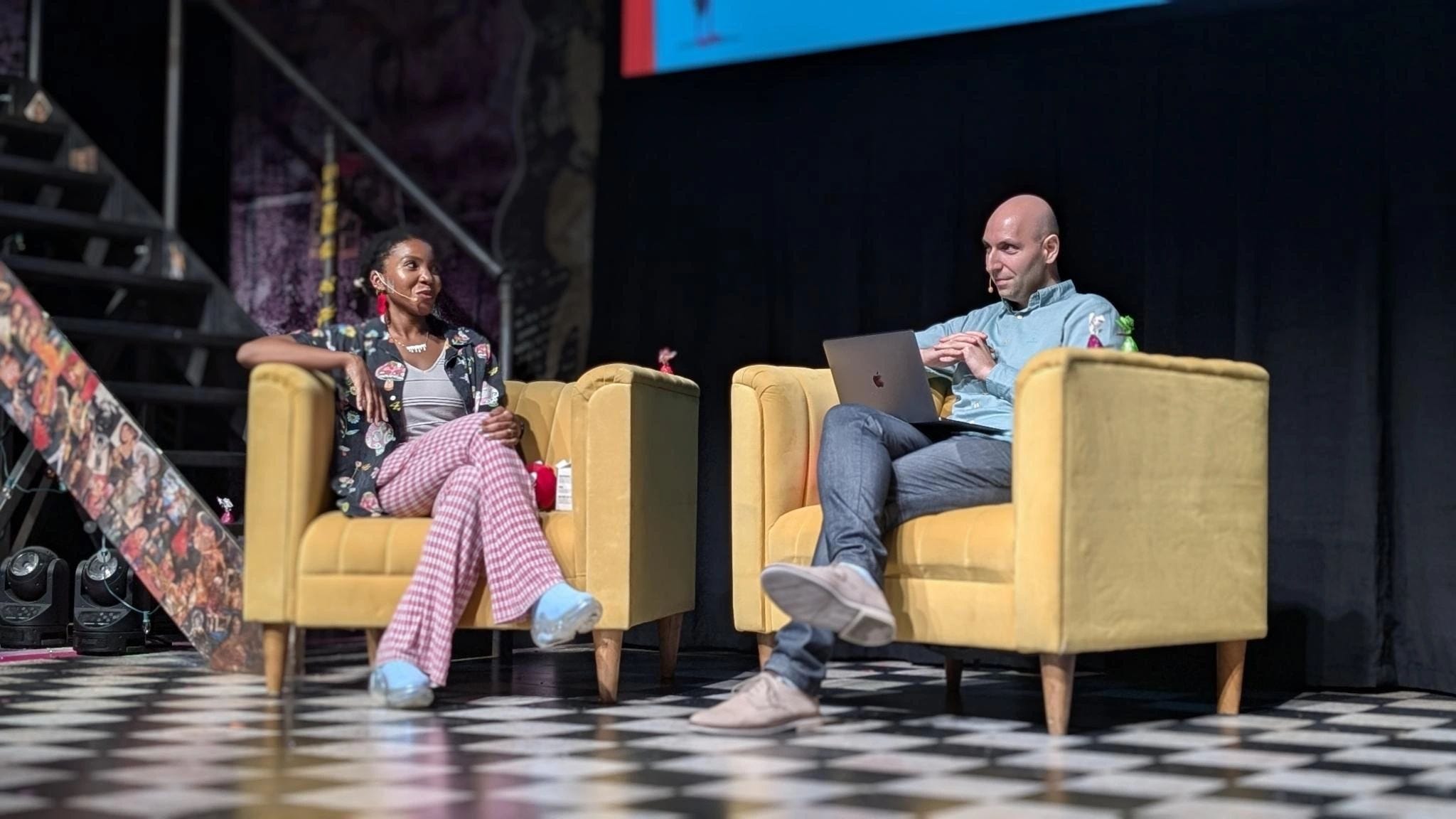
For her, the goal was not to replace her career but to expand it. Writing, teaching, and speaking about design also deepened her understanding of the field. In many ways the creative work reinforced the expertise she was developing as a Staff Designer.
Rather than competing with her career, the projects complemented it.
Creative blocks are part of the process
Like many creators, Catt has also experienced periods where creative work felt impossible.
She described a particularly difficult period around 2020 when global uncertainty and personal stress made it hard to create anything consistently. During that time she stepped back from several projects, including her work in indie game development.
Instead of forcing productivity, she allowed herself to pause. Eventually the desire to build returned. But the experience reinforced an important lesson: creativity does not always move in a straight line.
Sometimes it requires periods of rest before it can re-emerge.
Curiosity as a creative engine
Toward the end of our conversation we talked about what inspires her today.
For Catt, curiosity plays a huge role. Living in New York exposes her to an enormous range of ideas — from museums and conferences to conversations with other creators.
Those interactions often spark new directions for exploration. Creative work rarely happens in isolation. It grows from exposure to different perspectives, disciplines, and communities.
And the more curious you remain, the more opportunities for creativity appear.
Best way to support Growthmates? Explore more fantastic tools 👇
Framer — the fastest way to design and publish stunning websites (Growthmates.club is built on it).
Mobbin — the largest UX & UI reference library for deep product inspiration.
Obi by Cor — AI-powered onboarding voice assistant, I truly recommend.
Magic Patterns — The fastest way to prototype and test new features with AI.
🤝 Want to collaborate with Kate Syuma and Growthmates?
Explore collaboration with Growthmates here: https://growthmates.club/services
User-centric PLG in AI era course — join waitlist for future cohorts and get 100$ off: https://maven.com/growthmates/user-centric-product-led-growth?promoCode=growthmates
Follow Growthmates updates on:
Growthmates website with “The Holistic Growth Playbook”: https://growthmates.club
Substack Newsletter (for instant inbox delivery): https://www.growthmates.news/
LinkedIn: https://www.linkedin.com/company/growthmates-podcast/
Instagram: https://www.instagram.com/growthmates/
X (Twitter): https://twitter.com/kate_syuma
Where to find Kate Syuma:
Newsletter: https://www.growthmates.news/
Where to find Catt Small:
Personal website: https://cattsmall.com
LinkedIn: https://linkedin.com/in/cattsmall
Bluesky: https://bsky.app/profile/catt.design
Book (The Staff Designer): https://rosenfeldmedia.com/books/the-staff-designer/
Thank you for listening! Subscribe to the show on growthmates.club and get the free playbook with frameworks and insights.
If you’re enjoying the show, we’d love for you to leave a 5-star review on Apple Podcasts and Spotify. Your support helps us reach more listeners like you 💜
For sponsorship and other inquiries, reach out to hello@growthmates.club
Let’s keep growing together!