


Hello everyone 👋 I’m Kate Syuma, and welcome to Growthmates.news — the newsletter where we explore growth stories to inspire your professional and personal growth. Join the community of 7,500+ Product, Design, and Growth people from companies like Amplitude, Intercom, Miro, Atlassian, Superhuman, Framer, and more.
Users don’t want to learn your tool anymore. They want outcomes immediately.
We’re moving from: users learn the product to get value → products act with users to deliver value immediately. This might sound like a small shift.
But it changes what onboarding is, what activation means, and how users experience value from the very first interaction.
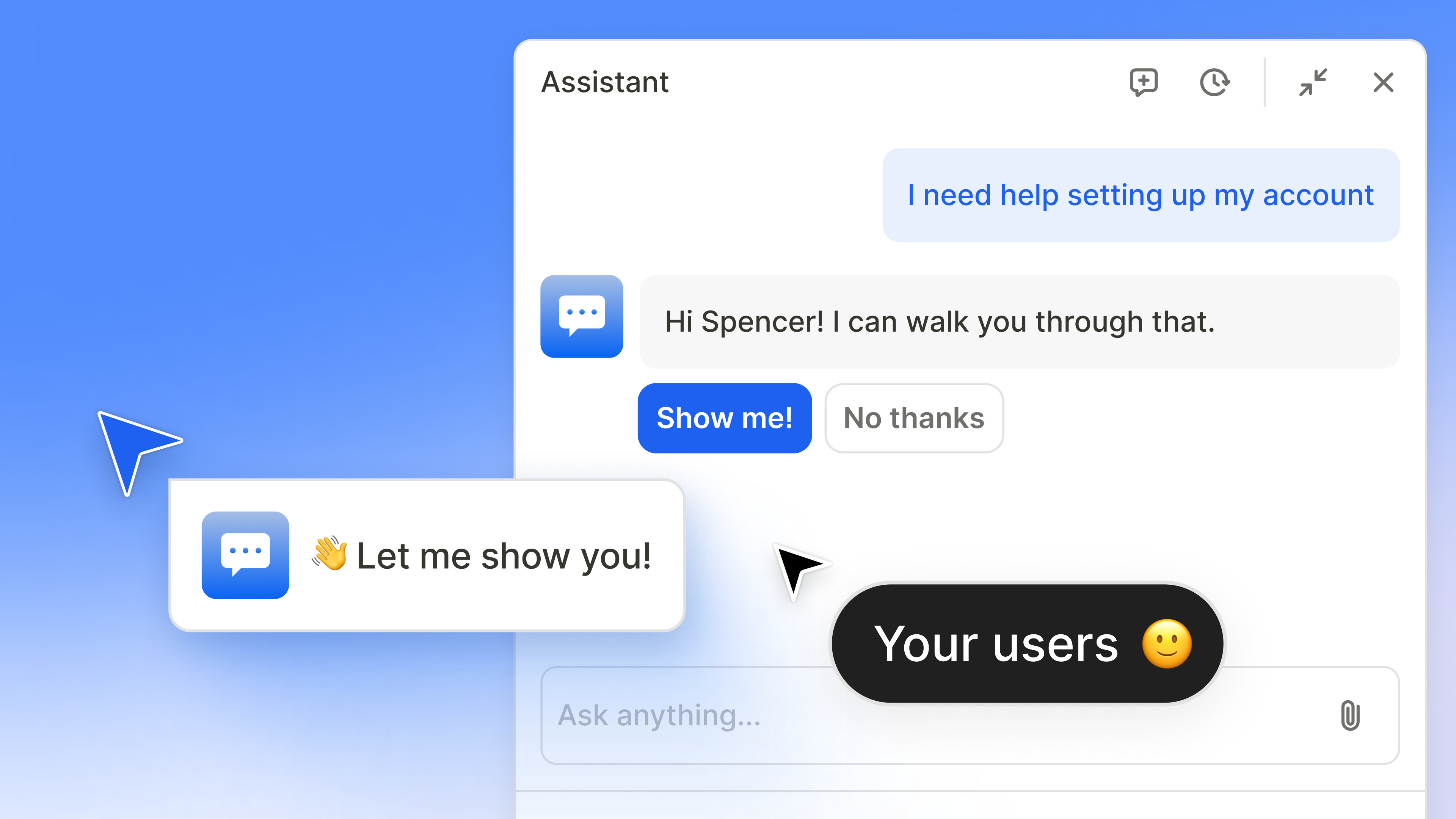
This post is brought to you by Amplitude — meet Amplitude AI Assistant: Example of how this pattern is evolving inside more mature products
This shift is not just happening in new AI-first tools. It’s also starting to reshape how existing platforms think about activation, support, and product experience.
Bringing behavioral context to AI tools like Claude and Cursor will help your team make smarter, faster product decisions. What used to require a data analyst, tool expertise, and hours of work now happens in minutes right inside your AI workflow.
Best way to support Growthmates? Explore more fantastic tools 👇
Framer — the fastest way to design and publish stunning websites (Growthmates.club is built on it).
Mobbin — the largest UX & UI reference library for deep product inspiration.
Obi by Cor — AI-powered onboarding voice assistant, I truly recommend.
Magic Patterns — The fastest way to prototype and test new features with AI.
Now, let’s dive into today’s story 👇
How AI onboarding looks today
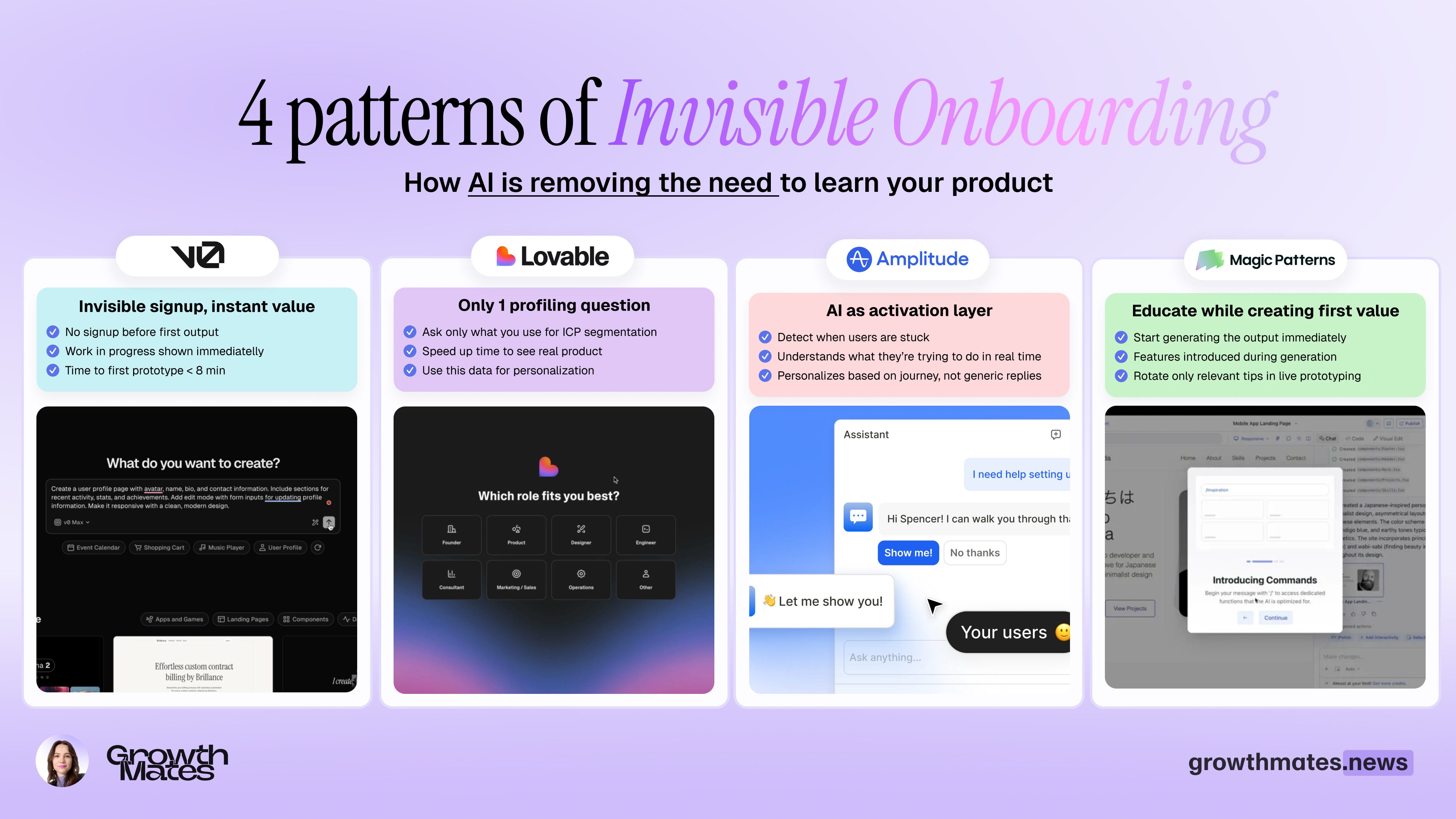
Over the past months, I’ve been looking closely at how this shift shows up in real products. I analyzed 6 AI onboarding flows:
V0,
I’ll share a deeper breakdown of each in a separate post, but even at a high level, one pattern is clear:
These AI products don’t try to teach you how they work. They start working with you immediately.
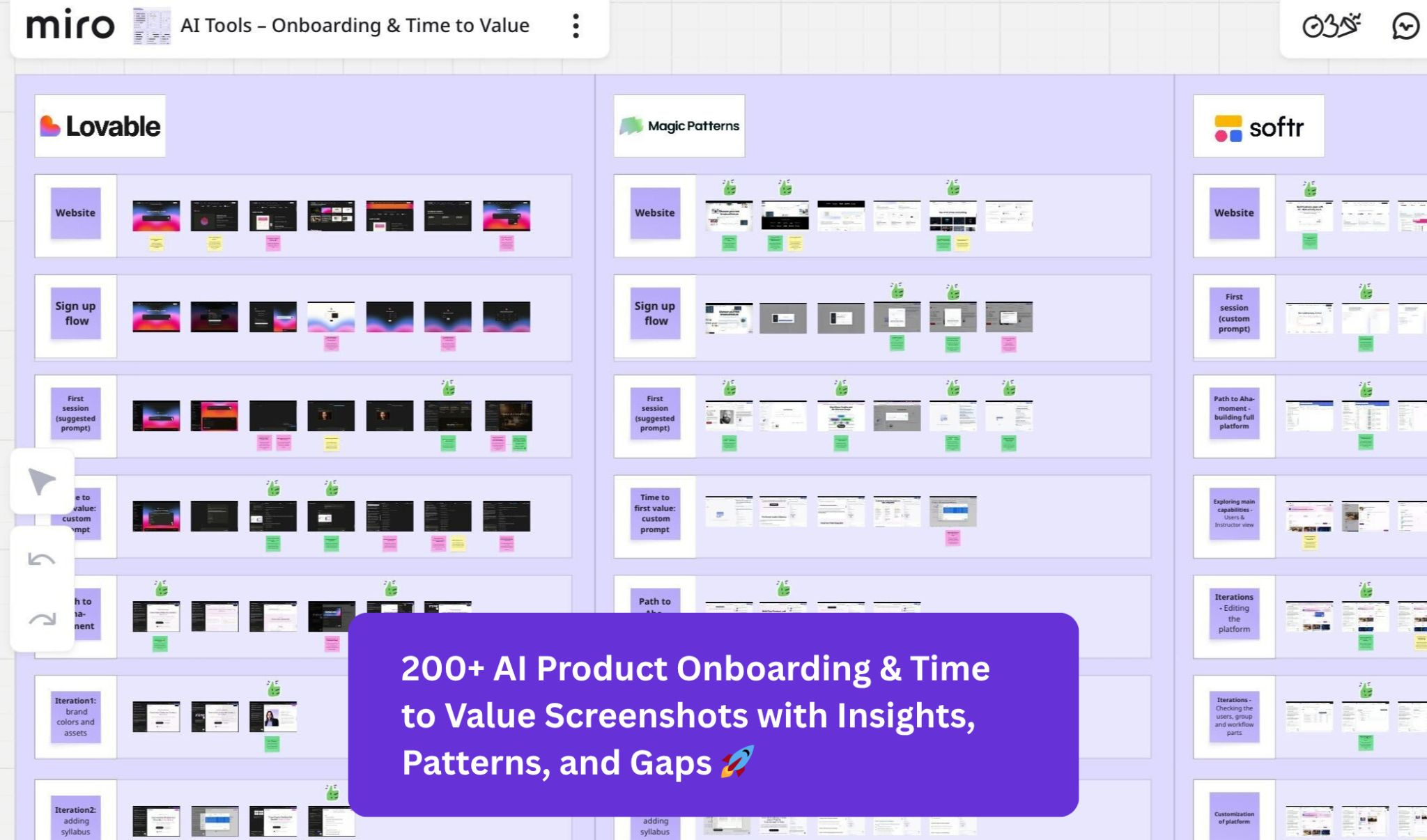
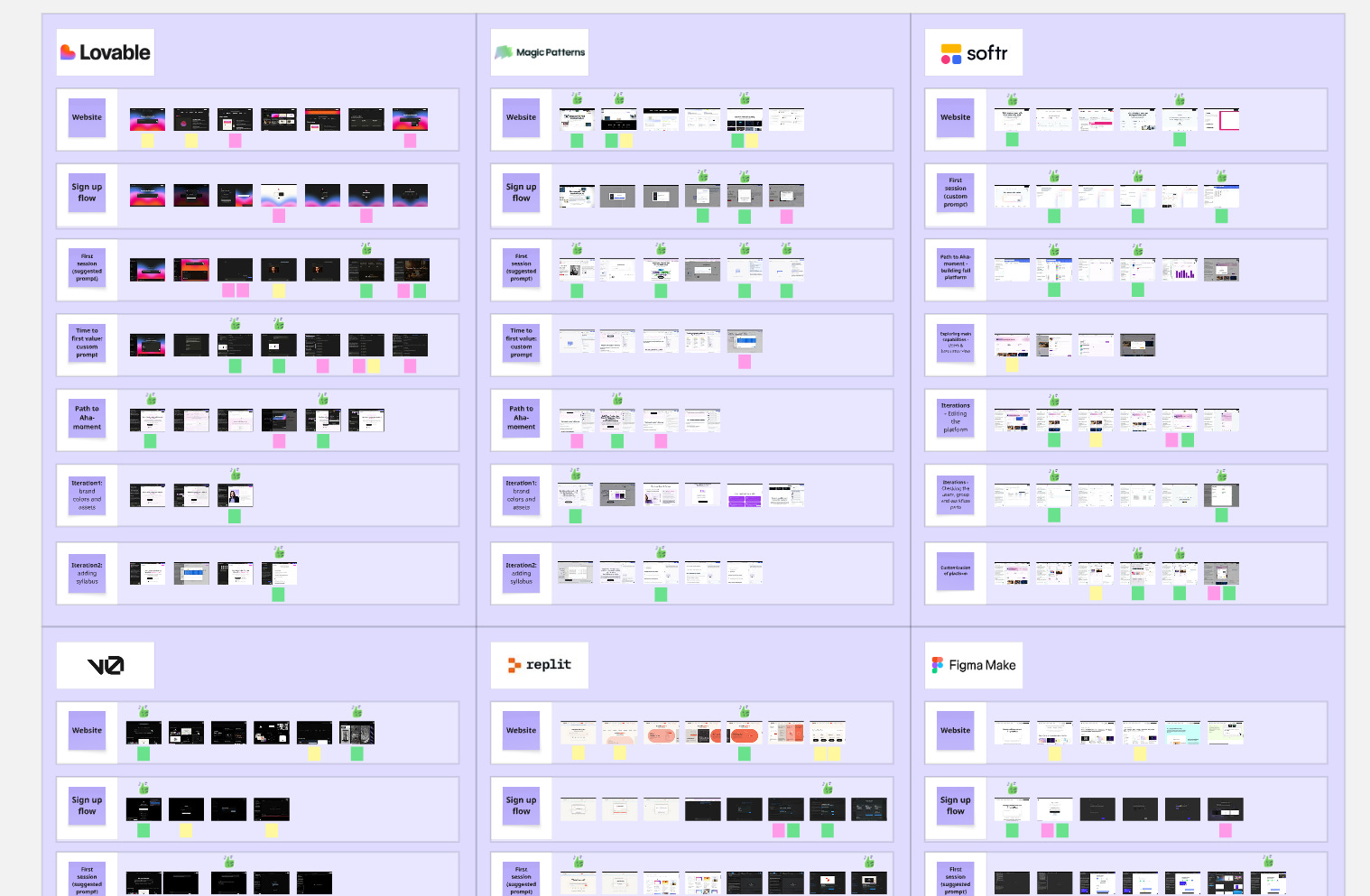
In the full teardown board, I break down:
Complete onboarding flows across all 6 products,
Behavior patterns behind what works,
Common mistakes that slow activation,
Emerging patterns defining AI onboarding today.
4 main patterns across AI products
Across Lovable, Replit, V0 and other products, I noticed a similar trend:
No sign-up interruption
No navigation learning before the outcome
Progressive reveal that leads to immediate output
The main shift: AI products move from time-to-value → time-to-completion of the first meaningful prompt. And the quality of that first outcome is all that matters.
Let’s check some of them 👇
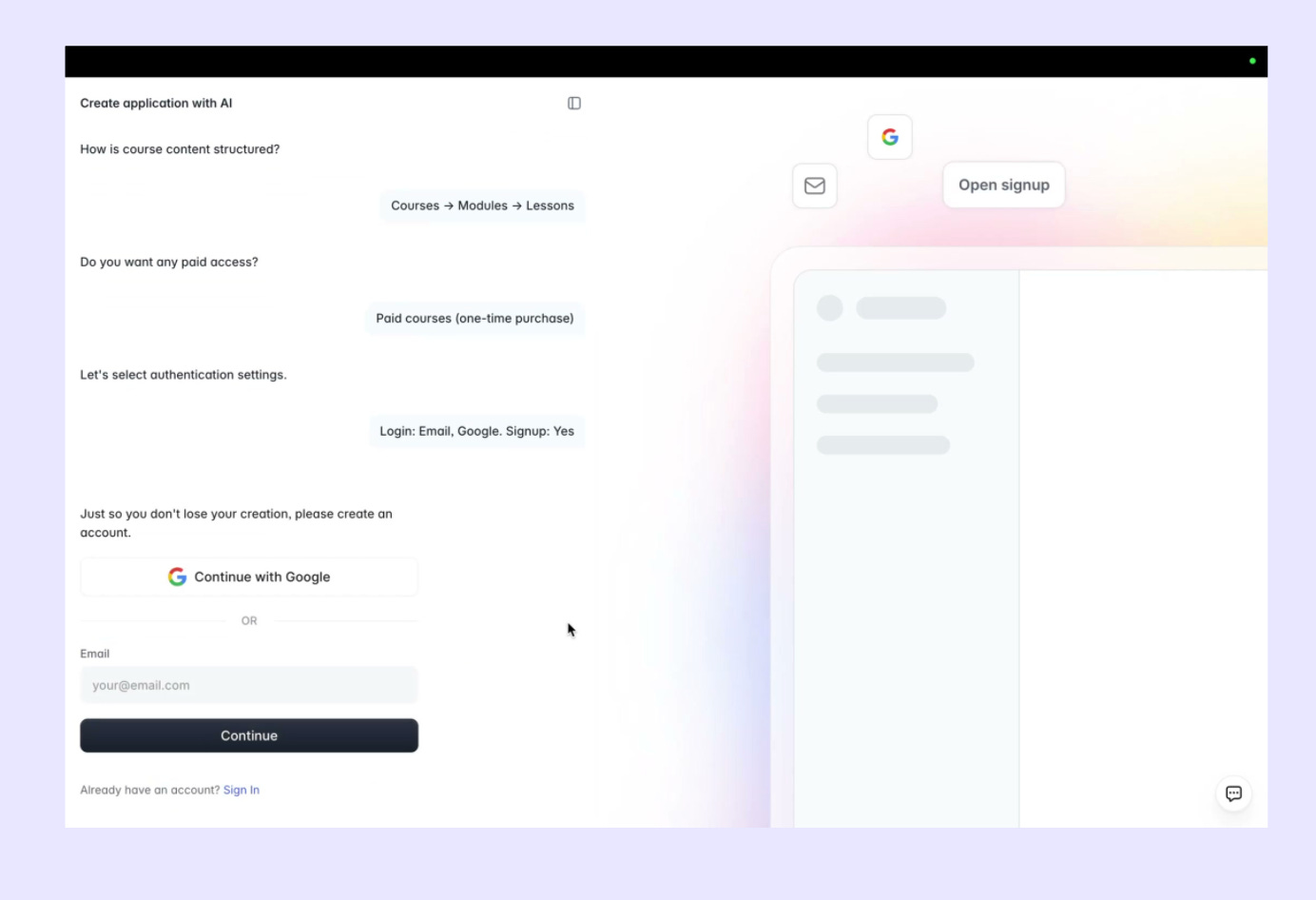
Softr is using an investment loop with pre‑signup creation 🏦. The user starts building the app and answers questions before being asked to register. By the time the registration prompt appears, they are already invested and motivated to continue.
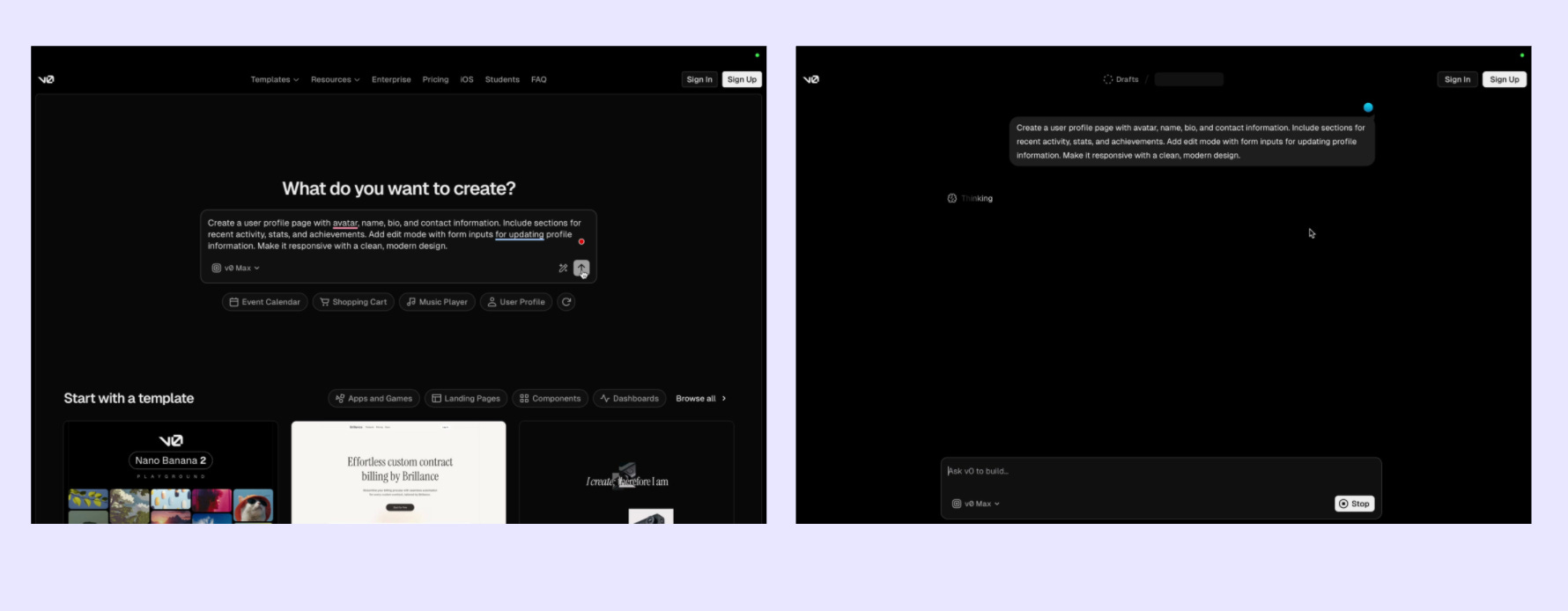
V0 starts generating the first outcome without asking you to sign up after the prompt 🤓. 4/6 AI tools asked me to sign up immediately, but V0 is not interrupting the first time to value. Their sign-up flow is almost invisible, with only 3 simple steps.
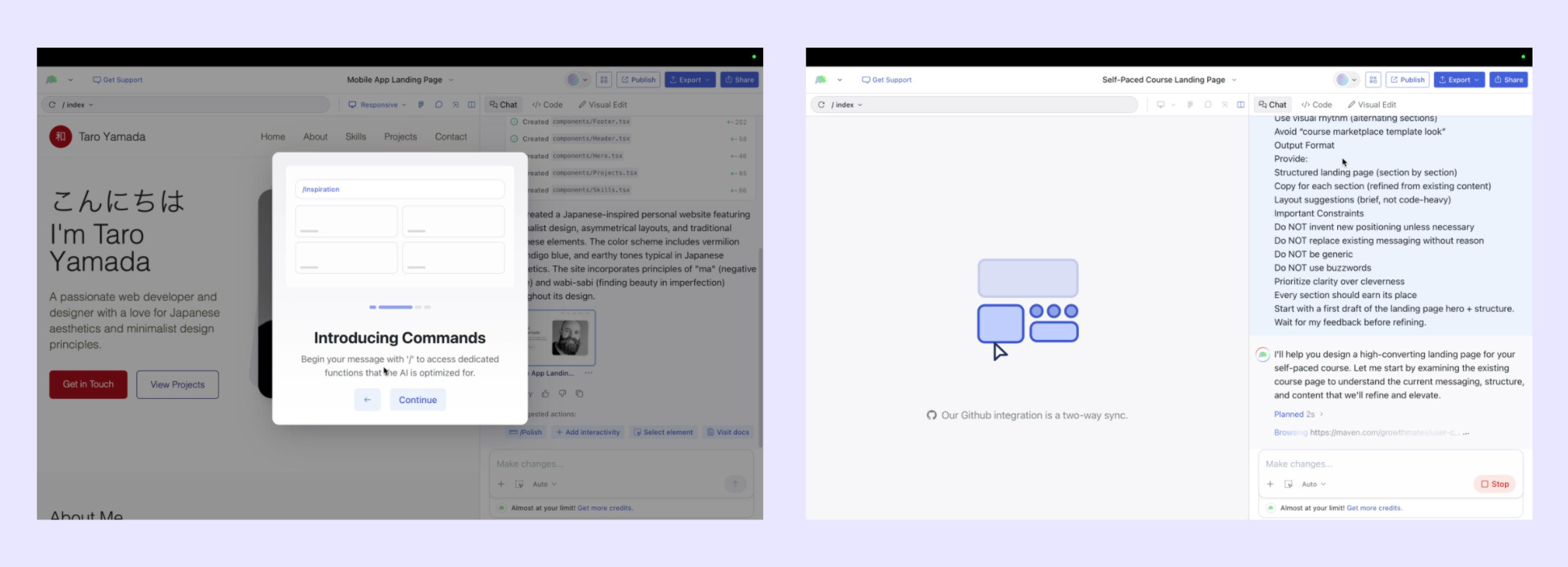
MagicPatterns introduces its features while the first value is being created 🧭. Immediately after sign‑up, a feature introduction (comments, infinite canvas) appears while the first generated output is already visible. While the AI generates, Magic Patterns shows useful tips about credits, shortcuts, and design systems, keeping the user engaged.
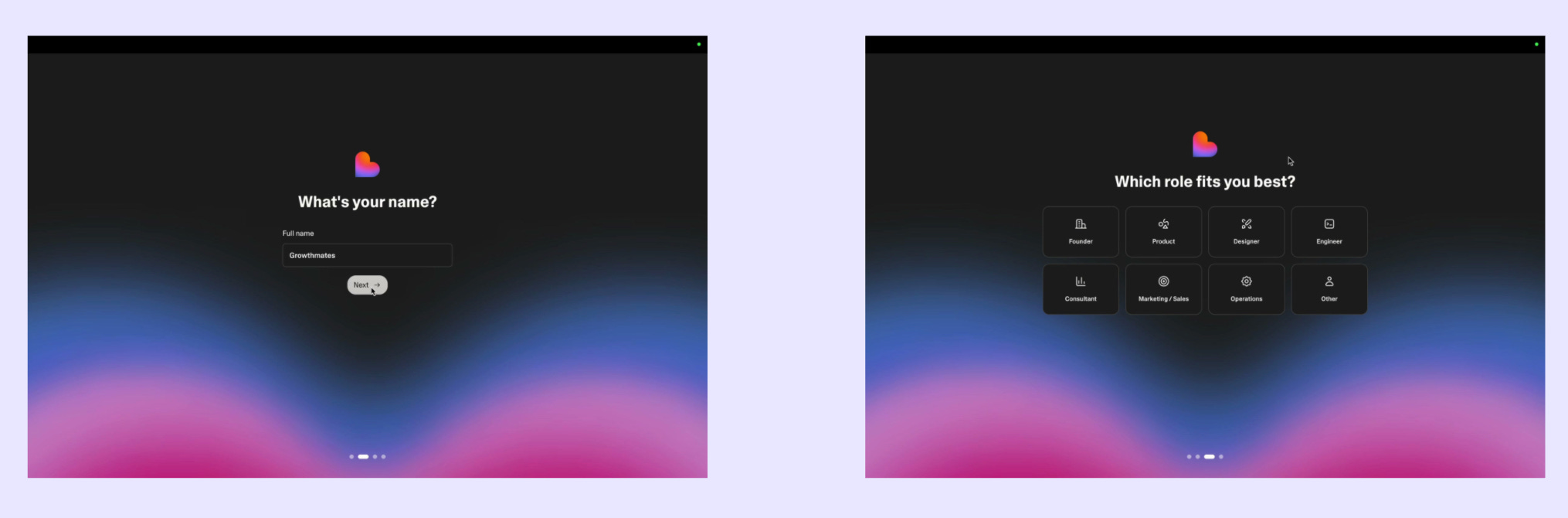
But what about profiling data? Lovable is still collecting it 👀. However, after signing up, I already expected to see some work-in-progress on the prompt or loading state, but it's missing. Instead of that, Lovable asked me for some profiling info (only name and role), which is also understandable if you want to learn who’s your TOP ICP or personalize the experience further.
…and this is just a glimpse of what I unpack in the full teardown board 👇
A new norm? AI assistants as an Activation tool
This shift is not only happening in new AI-first products. It’s also starting to reshape how more mature platforms think about activation, support, and the product experience itself.
A recent example is Amplitude and their AI Assistant release. At first glance, it might look like another chatbot. But what’s actually changing here is the role this type of interface plays inside the product.
Traditionally, support has been a fallback. Something users turn to when the product fails to guide them. It usually lives outside the core experience, disconnected from what the user is actually trying to do.
AI assistants don’t just answer questions. They help users finish what they started.
Instead of waiting for users to get stuck and ask for help, they operate inside the product, in context — and that’s where they begin to influence activation.
Here are three capabilities that make this shift meaningful:
1. Context-aware guidance, not generic answers.
Traditional chatbots rely on documentation. They respond to what users ask, but they don’t truly understand what’s happening.
AI Assistant is different. It uses behavioral data to understand where users are, what they’ve already done, and where they’re likely to struggle next. That means guidance is grounded in real user context, not generic help content.
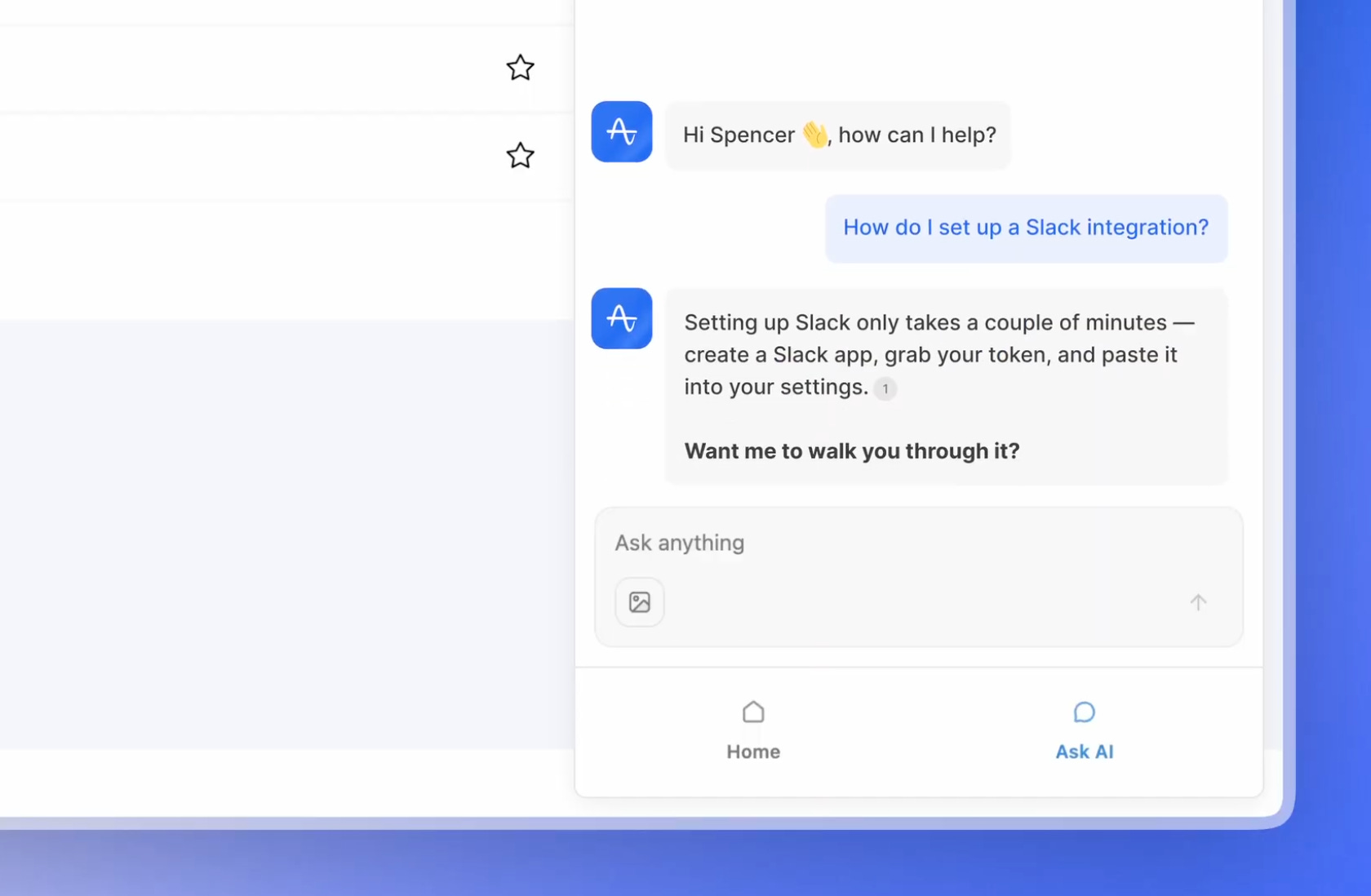
The result is a very different experience. Users don’t have to explain their situation or search for the right question. The product already has enough context to guide them forward.
2. From answers to in-product action.
Most support tools stop at explaining what to do next. But explanation is often not enough, especially in complex workflows.
AI Assistant can go further. It can trigger in-product walkthroughs, guide users step-by-step through tasks, and help them move forward without leaving the experience. Instead of switching tabs, interpreting documentation, and trying to replicate instructions, users stay in flow and continue making progress.
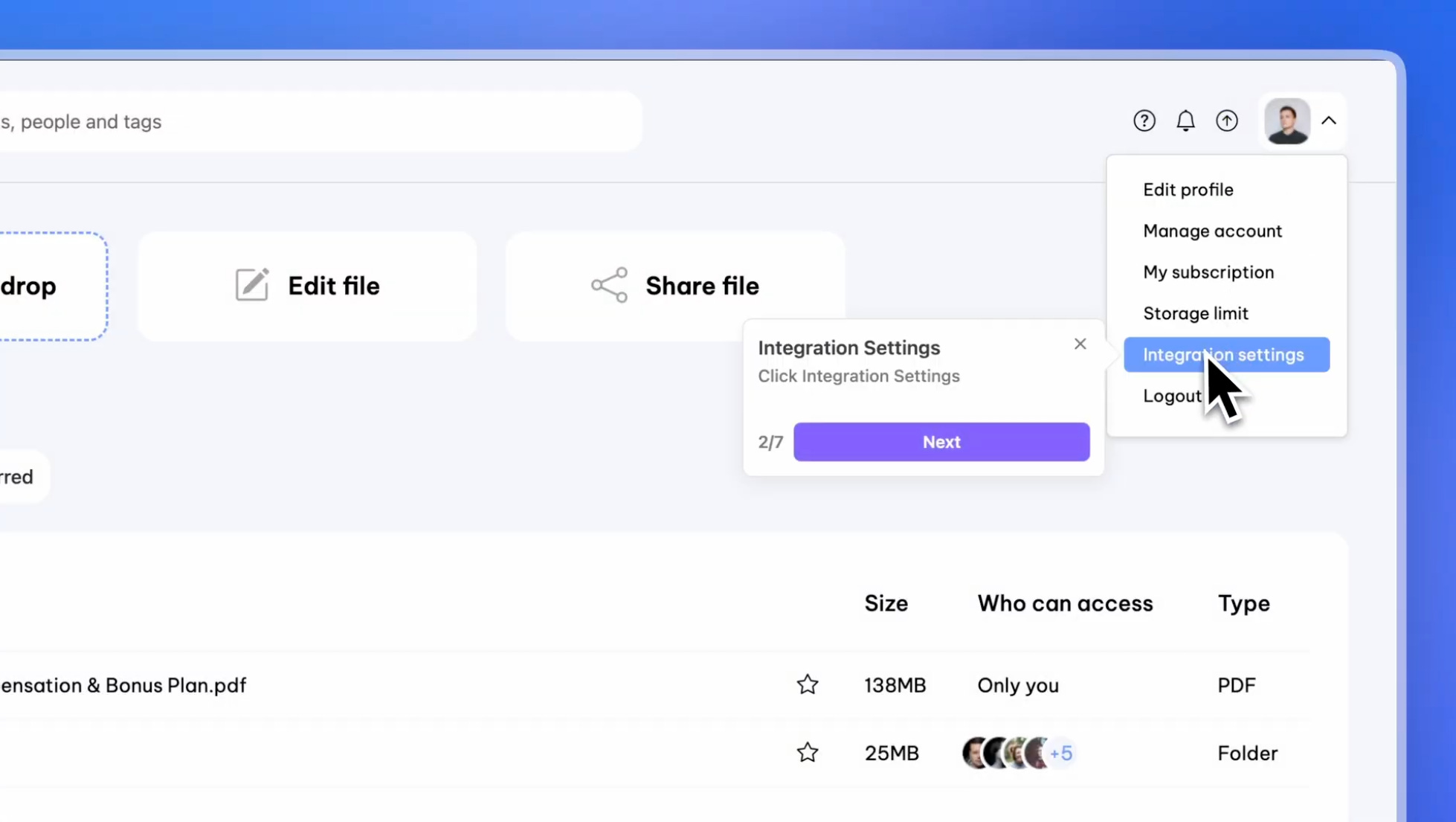
This is where time-to-value starts to compress. Not because users learn faster, but because they don’t have to translate instructions into actions.
3. Turning friction moments into activation moments.
In most products, friction is where activation breaks.
A user gets stuck, loses momentum, and either abandons the task or leaves the product entirely. AI assistants change how these moments are handled.
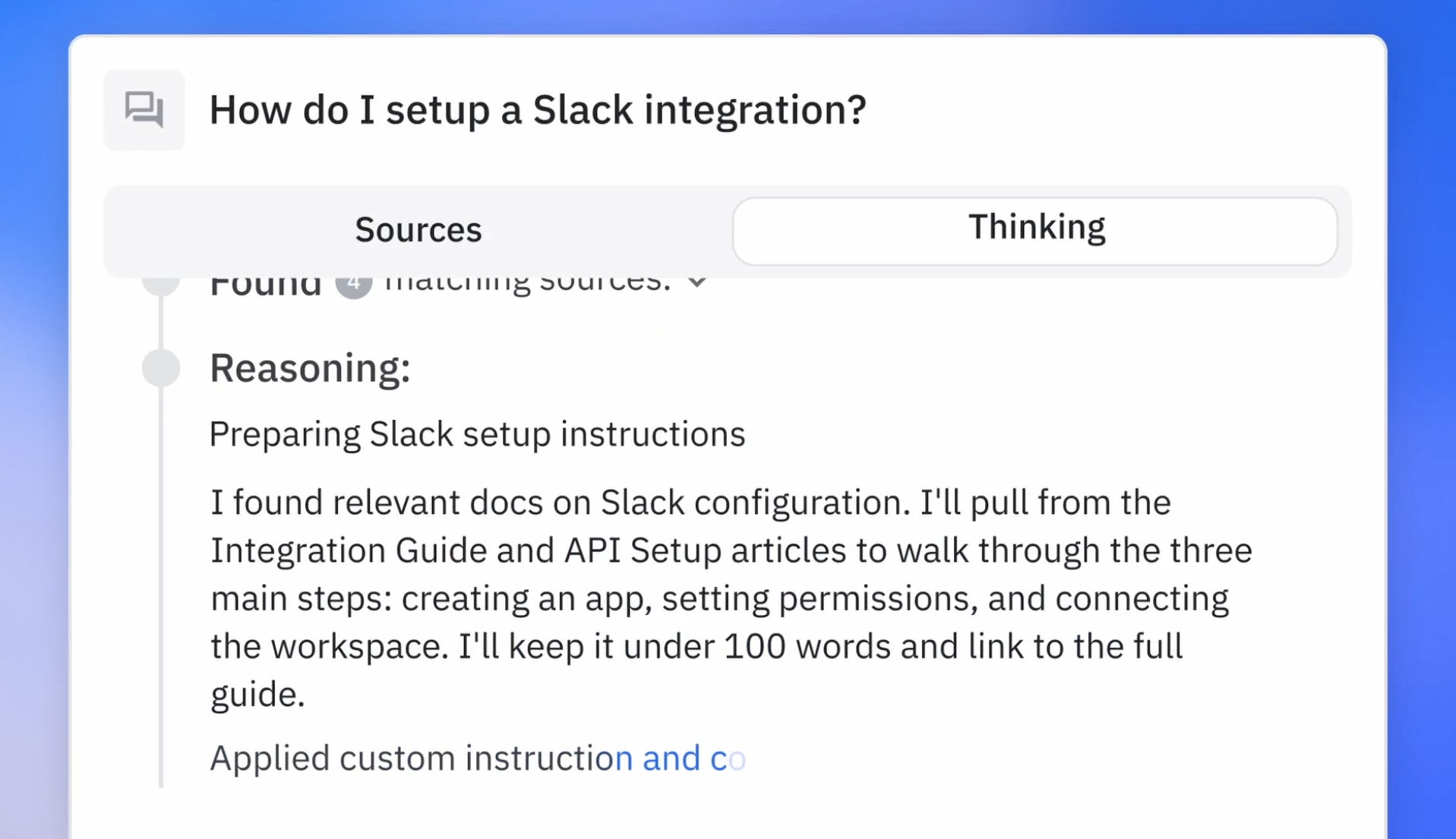
Instead of being a dead end, friction becomes a signal. The product can detect when users are struggling and step in with relevant guidance or actions at the right moment. What used to be a drop-off point becomes an opportunity to move users closer to completion.
Support is no longer separate from activation. It becomes part of it.
The future onboarding? Removing “translation work”.
What’s really changing here is not speed. It’s cognitive load.
Traditionally, users had to translate:
“What I want to do” → “Where do I click?”
“What I see” → “What does this mean?”
“What’s next” → “What should I do?”
AI is starting to remove that translation layer. The product no longer waits for users to figure it out. It meets them at the level of intent.
PLG in AI era? I’m preparing something new for you… 🤓
For a long time, I kept postponing the self-paced version of my course. It always felt too big, too messy, and easy to delay while client work and life kept moving. There was always a reason to wait — a crowded market, uncertainty about where to start, or simply not having the energy to figure everything out upfront.
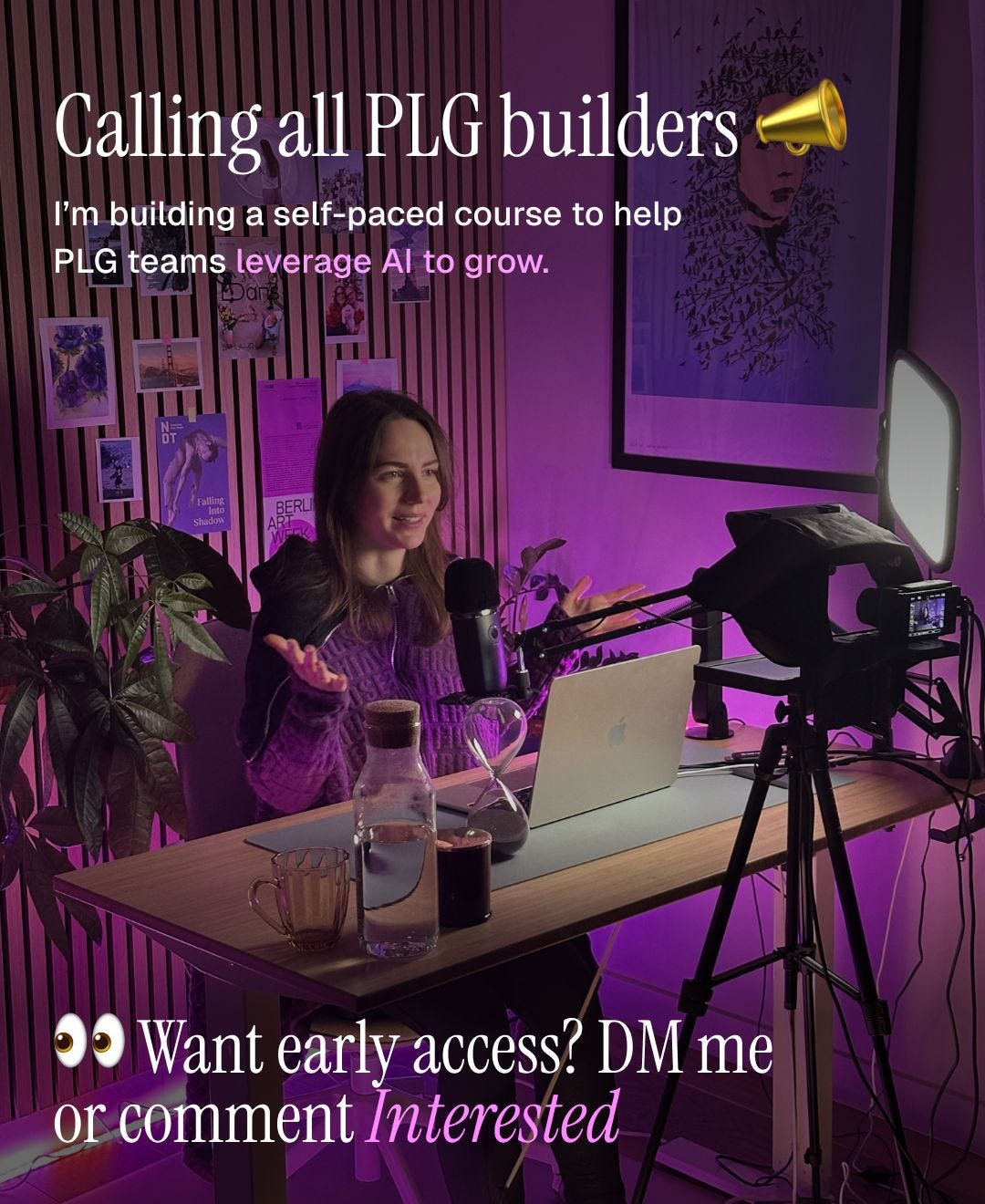
But recently, I realized I can’t keep putting it off. With motherhood ahead and ongoing deadlines, I focused on building something useful that doesn’t depend on me being there live.
Once I stopped overthinking, things moved much faster — now the course centers on how Product-led Growth is evolving in the AI era and what teams need to rethink in onboarding, activation, and monetization.
I’m shaping it now and created a short 3-minute form for anyone who wants early access and to help improve it ✨ If you fill it out, I’ll share early access before the public launch — and the self-paced version will be about 60% more affordable than the original live course.
🤝 Ways to collaborate with Kate & Growthmates:
Onboarding Design Sprint 🏃♀️
I will work closely with your team to help you fix your product growth challenges and improve the first user experience that can drive x2 uplift on your Activation.
⚡️ Fully booked. Join a watlist →
PLG Advising for your company 🧠
Hands-on, in-depth advising across product, UX, and growth to build a scalable, sustainable PLG system that will last for years.
⚡️ Fully booked. Join a watlist →
PLG Training for your team 🎓
A structured PLG training using the same frameworks I’ve taught teams at Grammarly, Autodesk, Monday.com, Intercom, Atlassian, and more.
⚡️ Fully booked. Join a watlist →
Brand Partnerships 📩
Let’s tell your product story to a trusted audience of 30,000+ product, design, and growth leaders — and co-create meaningful content that inspires the wider product and design community.
👉 Send an inquiry to hello@growthmates.club
Premium Edition 💎
If you’re getting value from this newsletter, get access to full archive with more frameworks, teardowns, and exclusive content on PLG, Activation, AI, and how to build meaningful products that delight users.
👉 Upgrade to Premium and get full access.
This is all for today, dear readers. If you found this helpful, please share your reaction and leave some comments 💜 It would give huge support for me to continue creating this!
If you find this newsletter valuable, share it with a friend, and consider subscribing if you haven’t already. There are some discounts available, and maybe you can expense this :)
Connect with me on LinkedIn and learn more about my work on Growthmates.club.
With best regards,
Kate Syuma