


Hello everyone 👋 I’m Kate Syuma, and welcome to Growthmates.news — the newsletter where we explore growth stories to inspire your professional and personal growth. Join the community of 7,500+ Product, Design, and Growth people from companies like Amplitude, Intercom, Miro, Atlassian, Grammarly, Framer, and more.
AI products are rewriting many product experiences — but onboarding is still where most users decide whether a product will stay in their workflow or disappear after the first session.
Today’s guest post is by Viktoria Kharlamova — she looked closely at how leading AI products onboard new users today. What patterns still come from classic SaaS onboarding? And what new approaches are emerging specifically for AI tools?
In this breakdown, we’ll walk you through real onboarding flows from products like ChatGPT, Perplexity, Claude, Gamma, Synthesia, and Manus — highlighting what works, what still feels unresolved, and what product teams can learn from it today.
If you’re building or scaling a product-led company, these insights will help you rethink how fast users reach value — and where most onboarding flows still fail quietly.

Introducing Viktoria Kharlamova (Growth Advisor, ex-Miro Growth)

Viktoria and I actually go way back — we worked together at Miro, where she was the company’s first Growth Product Manager, helping scale the product from an early startup to a global unicorn.
Today, she works as a Growth Advisor and Fractional CPO, helping B2B and B2C companies scale through product-led growth. She’s also deeply passionate about mentoring product managers and helping teams build strong growth cultures from the ground up. And in addition to that, she’s a very close friend of mine 🖤
In this piece, Vicki shares her observations after going through several leading AI onboarding experiences as a real user.
So let’s dive into her guest post👇
Over the last 5 years as a Growth Advisor, I’ve worked with 50+ companies, including Grammarly, Rask.ai, and Higgsfield.ai, and before that, I was the first Growth PM at Miro, for 5 years working on onboarding, activation, monetization, and virality, helping scale it from a startup to a unicorn.
After all that, you’d think I’d be tired of talking about onboarding. But honestly? It’s the one thing I keep coming back to, because it’s also where I keep seeing the same mistakes, no matter the product.
Most products don’t lose users dramatically. There’s no crash, no error screen, no obvious moment of failure. Users just... leave. They signed up, try around, and closed the tab before the product ever got a chance to prove itself. Activation fails quietly, long before anyone notices it in the data.
I recently sat down and went through the full onboarding flows of 7 leading AI-first products as a real user: Gamma.ai, Synthesia, ChatGPT, Perplexity, Claude, Midjourney, and Manus. What I found was a clear split between what still holds from the SaaS products and what AI products have had to figure out on their own.
What AI products inherited from SaaS
Some onboarding principles are timeless. No matter how new the technology, certain patterns appeared in every product analyzed.
📌 1. Fast time to value remains non-negotiable
The best flows got users to a real wow moment within three minutes.
Gamma.ai does this brilliantly - you enter a prompt and within seconds you’re looking at a full presentation draft.
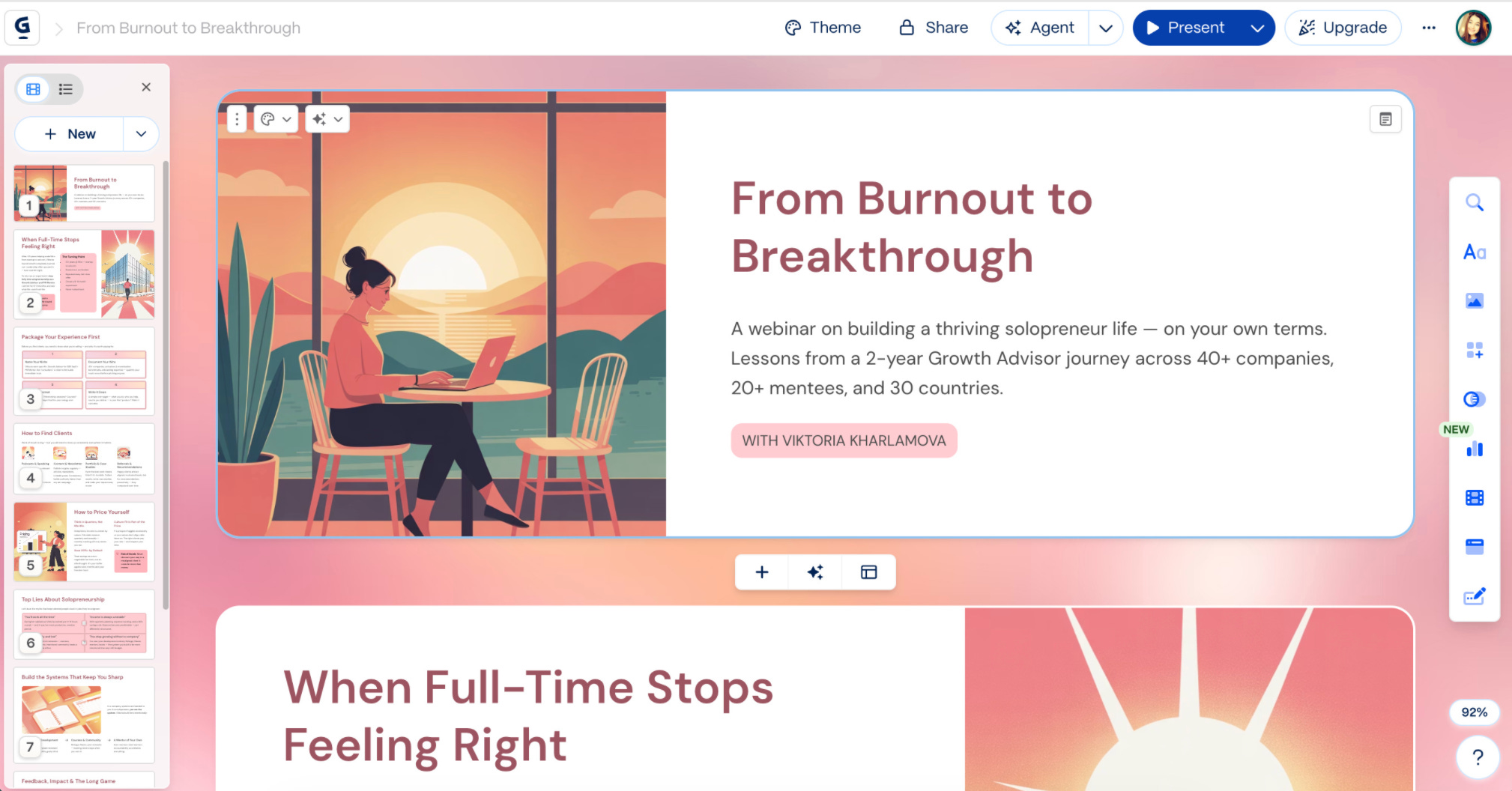
Claude follows the same logic: low friction at the start, real output with a landing page with analysis and plan almost immediately.

After 10+ years watching products grow, I'd argue this is the single most important lever in onboarding. Not the copy, not the design, but how fast the product got user to aha moment.
📌 2. Personalization still matters a lot
When a product asks who you are and what you’re trying to accomplish, it’s not just collecting data, it’s telling you this product was built for someone like you. Then it provides you easy to start with the relevant tasks to follow effort-reward and decrease time to value.
Synthesia does this well, asking basic questions about role and goal and then provide easy start tasks.

📌 3. Upgrade and invite triggers need to be earned or positioned correctly.
We learned this in SaaS the hard way. Hitting users with a paywall or a invite your team screen before they’ve experienced any value doesn’t build urgency — it builds skepticism.
Perplexity has a nice take on this: they frame the upgrade as a 7-day gift they’re giving you at registration. Same trigger, completely different feeling.

Want to go deeper? Me and Viktoria Kharlamova ran a research on User Onboarding and Activation with 80+ companies and turned everything into a practical playbook with experiments insight and — Onboard Report.
What are the pattern in AI products Onboarding
This is where it gets interesting and where I think most teams are still figuring things out.
📌 1. Let users try the product as fast as possible.
The first interaction isn’t a step in a funnel, it’s the opportunity to try before any investments and registeration. If that moment works, everything else gets easier.
Perplexity is a great example, no signup friction, you’re just land in the product immediately.

📌 2. Pre-made content matters more than before. Especially prompts.
In SaaS, features can often speak for themselves. In AI, the blank canvas is a real barrier. Users with lower AI familiarity don’t know what to ask or where to start. The products that offered example prompts, premade dialogues, or clear use case categories dramatically reduced drop-off at the most vulnerable moment — the first interaction.
ChatGPT shows pre-made chats that help users quickly understand what a good prompt looks like and start interacting immediately.

Synthesia with premade prompt for your video, so there is no need to write it from scratch, you can fix detail in 10 seconds and launch generation!

📌 3. Integrations are powerful tools for activation and retention.
AI tools don’t work in isolation, they live inside workflows. The products that surfaced integrations early, like Manus, gave users a reason to keep coming back and made themselves much harder to replace.

In my experience, the switching cost of any tool is almost always tied to how embedded it becomes in daily work. Onboarding is your first real shot at starting that process. After working on the growth of 7 AI product I see that integrations are the great tool to empower LR retention.
📌 4. Regulatory requirements add friction you can’t remove.
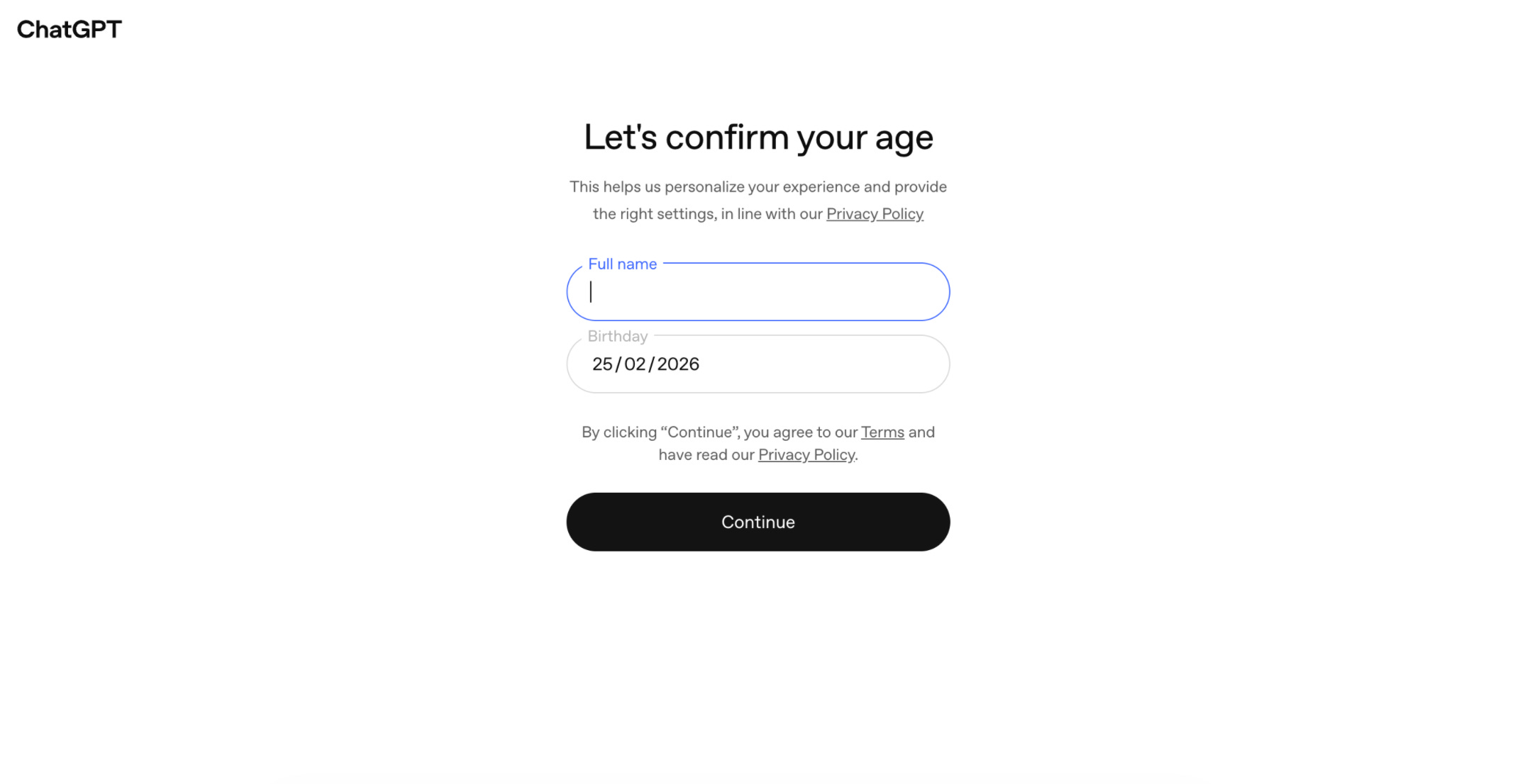
Age verification, AI disclosure notices, data consent - all these are unique to AI products and they interrupt the flow. The best products explained why they asking, which made the interruption feel more reasonable.
ChatGPT asks you birthday as do many other AI products. It also explains why they need this info.
📌 5. Value first, payment later.
In most AI products full activation takes time. You need multiple sessions, real use cases, and enough credits to actually form a habit. That means the activation metric correlates more with second and third month renewals than with the first purchase. But users still need to reach an Aha moment before they are ready to pay and it correlates with first payment a lot.
Gamma.ai handles this well: new users get free credits to explore the product, get to that Aha moment, and then the upgrade feels natural rather than forced.

What I’d want to see more of
Across almost all products, a few gaps kept appearing:
Measure the value users actually get. Most products have no idea whether their users reached an aha moment or just did some actions. Manus was the only product I saw making a real attempt at this and checking in on the results you got.

Ask about AI experience level. Almost nobody does this, and it surprises me a lot. It makes a huge difference whether someone uses AI tools every day or is trying it for the very first time.
Wait longer before asking to invite your team. So many products ask you to invite a colleague before you’ve even formed an opinion and got the value. That’s asking for a favor from someone who has no reason to give it yet.
What you can do right now:
Reading about onboarding is one thing. Actually improving it is another. Here’s where to start:
1. Map out your own onboarding flow end-to-end. Go through it as a real user and check the time how long it takes to reach an Aha moment. Then go back through all the principles I covered above and write a list of improvements to implement.
2. Audit your triggers. Find every place in your flow where you ask users to upgrade, invite a colleague, or fill in extra information. For each one, ask: has this user actually gotten value yet and if we position them correctly?
3. Explore all seven AI onboarding flows yourself. The full breakdown with screenshots and my notes is here, use it as a benchmark and a source of ideas for your own product.

Want to get onboarding right from day one?
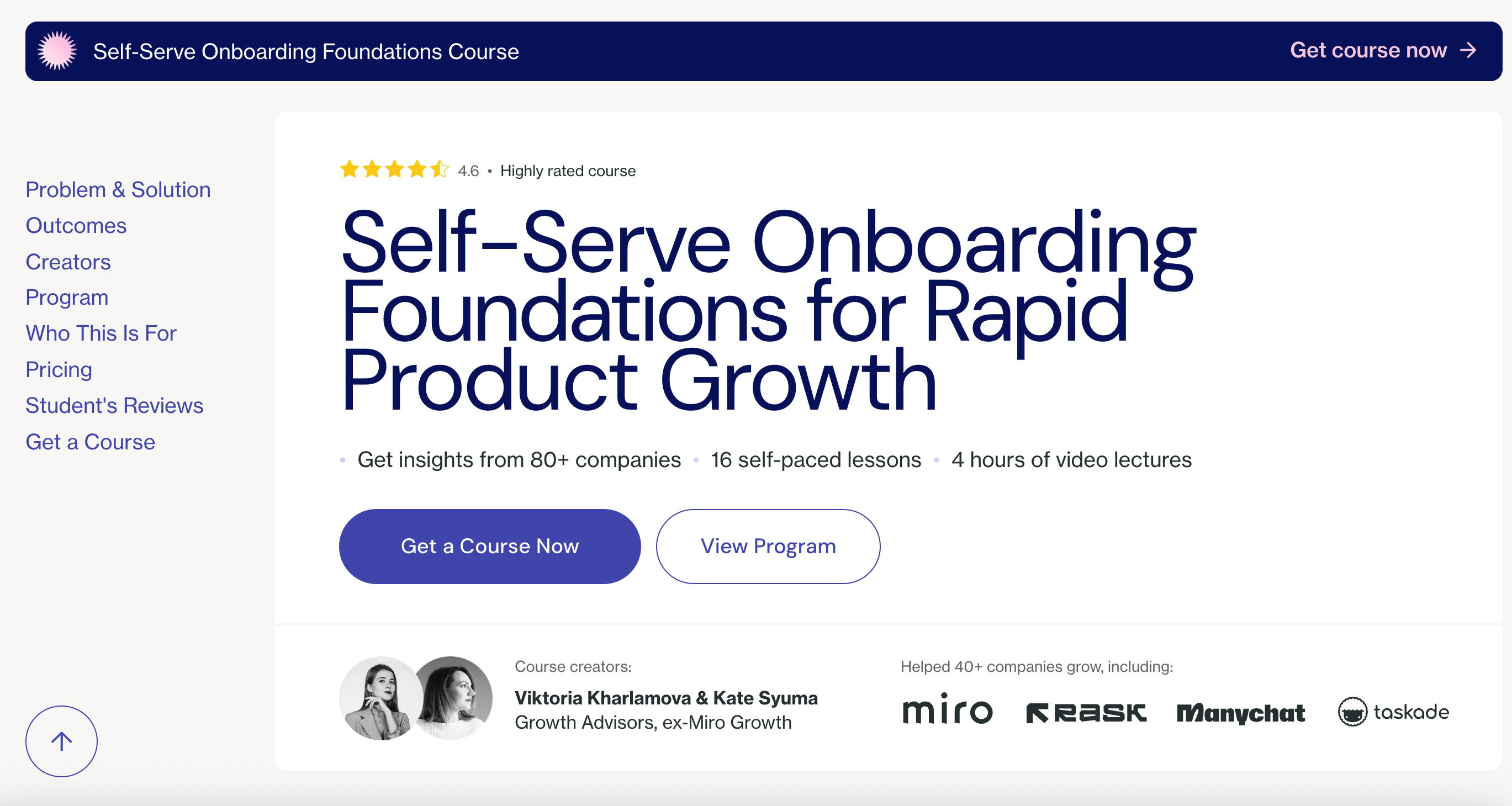
Together, we turned all our knowledge and experience into a full course — Self-Serve Onboarding Foundations for Rapid Product Growth.
16 lessons, 4 hours of videos, insights from 80+ companies, and a self-paced format — all for €199. Built by two ex-Miro growth leads who’ve run 200+ experiments and helped scale products from a start-up to a unicorn. If you’re losing users in the first 7 days, this is where to start.
This is all for today, dear readers. If you found this helpful — please share your reaction and leave some comments 💜 It would give a huge support for me to continue creating this!
Best way to support Growthmates? Explore more fantastic tools 👇
I curate the Growthmates Bundle to share not just ideas — but the tools I trust and use in my own work. Each one is a handpicked #1 tool for a key product area, and I’m proud to have them supporting this newsletter 🖤
Framer — the fastest way to design and publish stunning websites (Growthmates.club is built on it).
Mobbin — the largest UX & UI reference library for deep product inspiration.
Obi by Cor — AI-powered onboarding voice assistant, I truly recommend.
Magic Patterns — The fastest way to prototype and test new features with AI.
If you find this newsletter valuable, share it with a friend, and consider subscribing if you haven’t already. There are some discounts available, and maybe you can expense this :)
Connect with me on LinkedIn and learn more about my work on Growthmates.club.
With best regards,
Kate Syuma