


Hello everyone 👋 I’m Kate Syuma, and welcome to Growthmates.news — the newsletter where we explore inspiring and practical growth stories from products we love. Join the community of 5,500+ Product, Design, and Growth people from companies like Amplitude, Intercom, Miro, Atlassian, Grammarly, Framer, and more.
What is good for the user is good for business. This phrase became my professional motto and has remained so for years. However, let’s be honest with ourselves and check in for a second:
When was the last time you talked to your end user?
How often do you usually talk to them?
What holds you back from that?
In the reality of high-paced work on product growth, I’ve seen many times teams sacrifice research activities because it takes too much time.
Before we dive in…This post is brought to you by Amplitude — the product analytics platform that helps teams understand user behavior and build better experiences. With Session Replay, you can watch real user interactions to uncover friction and get real-time qualitative insights!

Today, we’ll see how we can get closer to users in a high-speed environment 👇
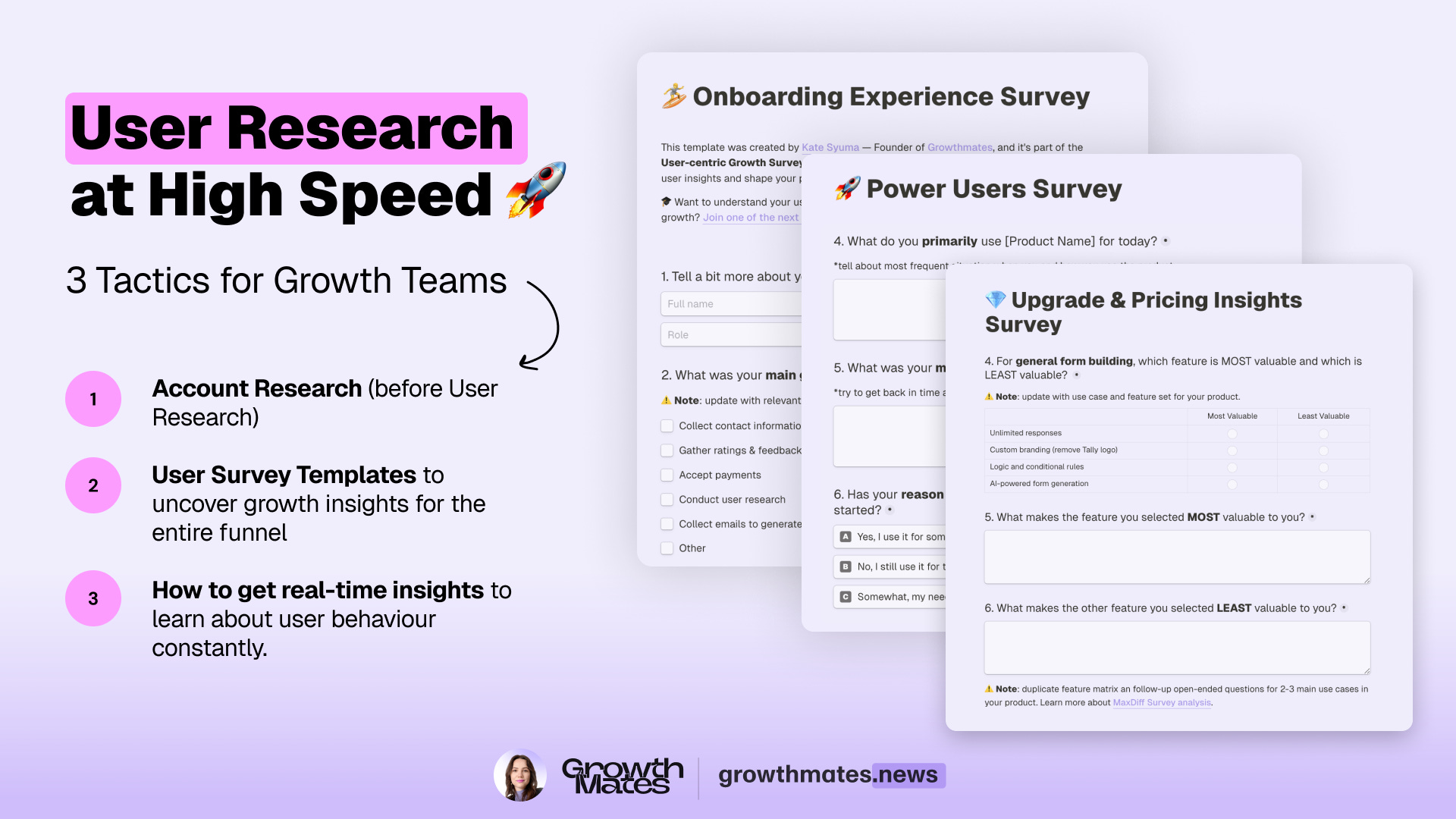
Account Research (before User Research) to iterate on messaging and positioning;
User Survey Templates to uncover growth insights for the entire funnel;
How to get real-time insights to learn about user behavior constantly.
1. Account Research (before User Research).
For B2B products, building a deep understanding of your ICP (Ideal Customer Profile) is essential. Before diving into end-user behavior, start with account-level insights — the context of the company, their challenges, and what signals they’re giving off.
Typically, the B2B ICP description includes many elements, such as:
Market & Industry — What specific vertical/sector do they operate in?
Geography —In which countries/regions do they operate?
Size — What is their growth stage? (Easy-stage, SMB, Enterprise)
Problems — What are their top 3 business challenges?
Implications —What revenue is lost due to these problems?
User Role — What is their job title and department?
Buyer Role — Who are the key decision makers?
Buying Process — What is their average purchase timeline?
Technographics —What core systems do they use?
The more detailed your profile, the sharper your positioning and messaging — both externally (marketing, sales) and internally (onboarding, in-product UX).
💬 You might ask, “Kate, we have 100s of potential companies. How do we prioritize with limited time?”
💡 My answer: you don’t need 100s — you need the right 10 to 20 accounts. And you don’t need hours of manual research anymore.
But how do you narrow it down and get insights before jumping on a call? Luckily, we live in the world of AI, and we have various tools that can do this job for us.
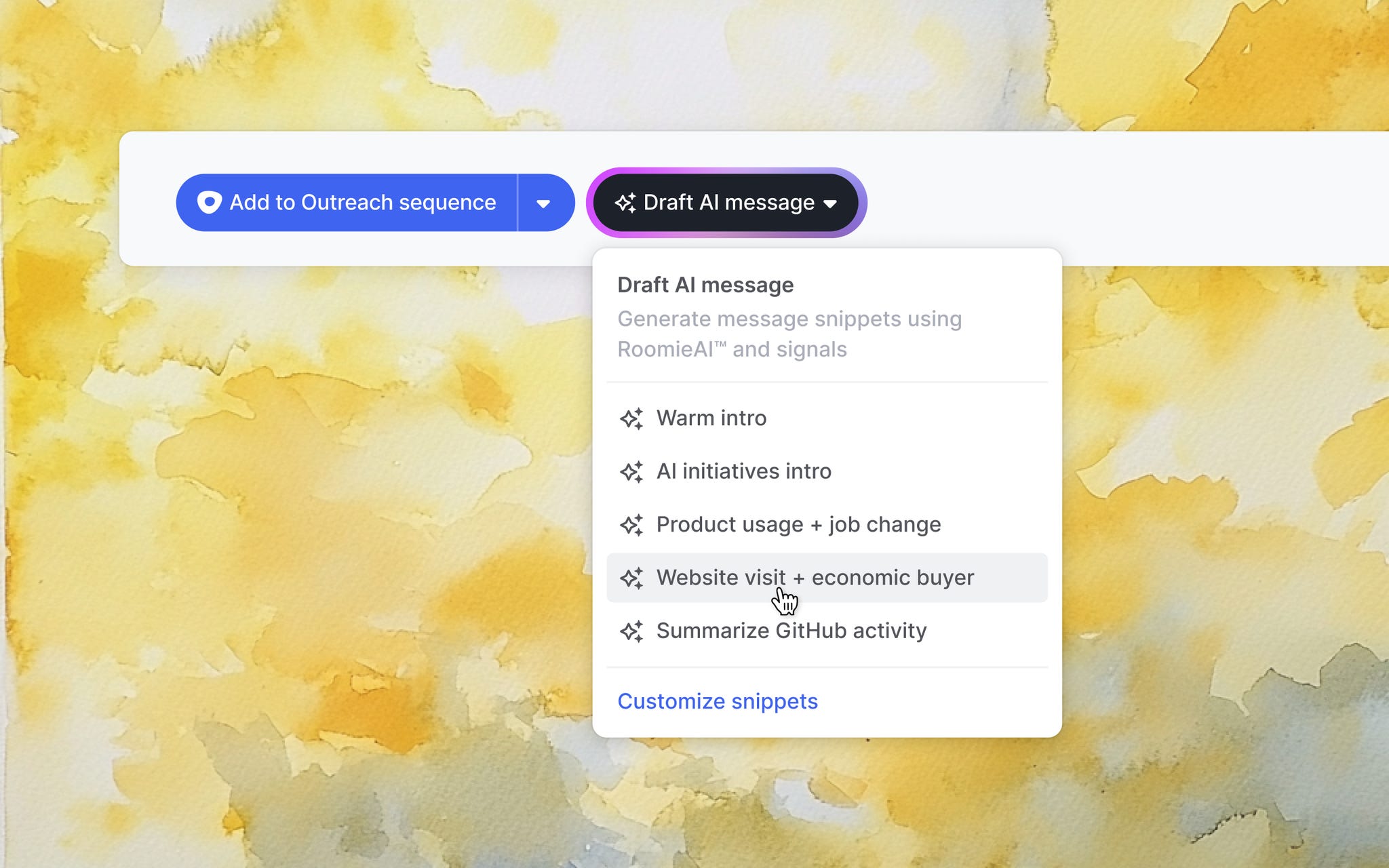
Recently, I uncovered the feature from CommonRoom that helps you go from guesswork to signal-based prioritization in seconds. Their new AI-powered account research helps you cut the time from 60 minutes to 60 seconds by surfacing:
Recent funding or hiring signals;
Product usage and engagement trends;
Competitor mentions;
Community signals from Slack, Discord, social, and forums;
Website and content interaction patterns;
…and the list goes on.

After collecting these insights, you can use summaries to prioritize accounts with these insights. With this data, you can cluster accounts based on readiness, fit, or intent — and personalize your approach even before the first conversation. It’s a high-speed way to get closer to the right accounts first, not just more of them.
As the next step, you can write personalized messages for your selected accounts (with the help of AI) and invite them for a call, survey, or user interview.
Next, it’s time to learn directly from end users of your products to learn what can help them get the most value out of your product. Let’s explore a fast method for that 👇
2. User Surveys to Uncover Growth Insights.
When I was at Miro, my favorite part of the job was conducting user interviews. I got so passionate about it that I even set a challenge to run 100 interviews with end users in one year. It wasn’t too difficult to meet (and exceed) that goal 😅
It was an incredible investment during my first years at the company. It helped train my intuition and “gut feeling” for the years ahead. However, interviews are very time-consuming, especially if you spend 60 minutes in conversation with a stranger and lack proper preparation or context about who they are.
💬 You might ask, “Kate, how can we learn the most about users before doing interviews?”
💡 My answer: you don’t need to start with interviews. Start with a survey that helps you collect better qualitative data first. Then, run follow-up interviews only with the most relevant users who’ve already shown intent or shared something meaningful.
To help you get to users faster, I co-created a User-centric Surveys Pack 🔎 with Tally — a collection of 3 research-backed templates to help you uncover key user insights and shape your growth strategy:
Onboarding Experience Survey (12 questions);
Power Users Survey (17 questions);
Upgrade & Pricing Insights Survey (20 questions).
Let’s take a sneak peek here 👇