


Hello everyone 👋 I’m Kate Syuma, and welcome to Growthmates.news — the newsletter where we explore growth stories to inspire your professional and personal growth. Join the community of 7,200+ Product, Design, and Growth people from companies like Amplitude, Intercom, Miro, Atlassian, Grammarly, Framer, and more.
I don’t share often here “behind the scenes” of my work with clients, but today I want to change that. This year, I had a very special collaboration with Mobbin — my favourite tool for UX inspiration, which I’ve known for years.
We started with a 2-week Onboarding Sprint, where I shared my fresh perspective on their onboarding, team activation, and free-to-paid conversion flows. Since then, the team implemented a bunch of updates, and I’m happy to share some of them that you can try out, so their small wins can become yours.
⏰ Planning to improve Activation in Q1? I have one last collaboration slot available.
I’ve helped 25+ product teams uncover the real blockers — and the quick wins that moved activation and revenue. Check it out here →
Before we dive in… Meet Growthmates Partners 🚀
I curate the Growthmates Bundle to share not just ideas — but the tools I trust and use in my own work. Each one is a handpicked #1 tool for a key product area, and I’m proud to have them supporting this newsletter 🖤
Best way to support Growthmates? Explore these fantastic tools below 👇
Framer — the fastest way to design and publish stunning websites (Growthmates.club is built on it).
Mobbin — the largest UX & UI reference library for deep product inspiration.
Obi by Cor — AI-powered onboarding voice assistant, I truly recommend.
Now, let’s dive into today’s story 👇
What you’ll learn today:
How a 2-week onboarding sprint revealed the moments where Mobbin was quietly losing activation.
The three product moves that turned those insights into real growth wins.
How a shift toward B2B is opening a much bigger (and stickier) chapter for Mobbin.
Introducing Mobbin
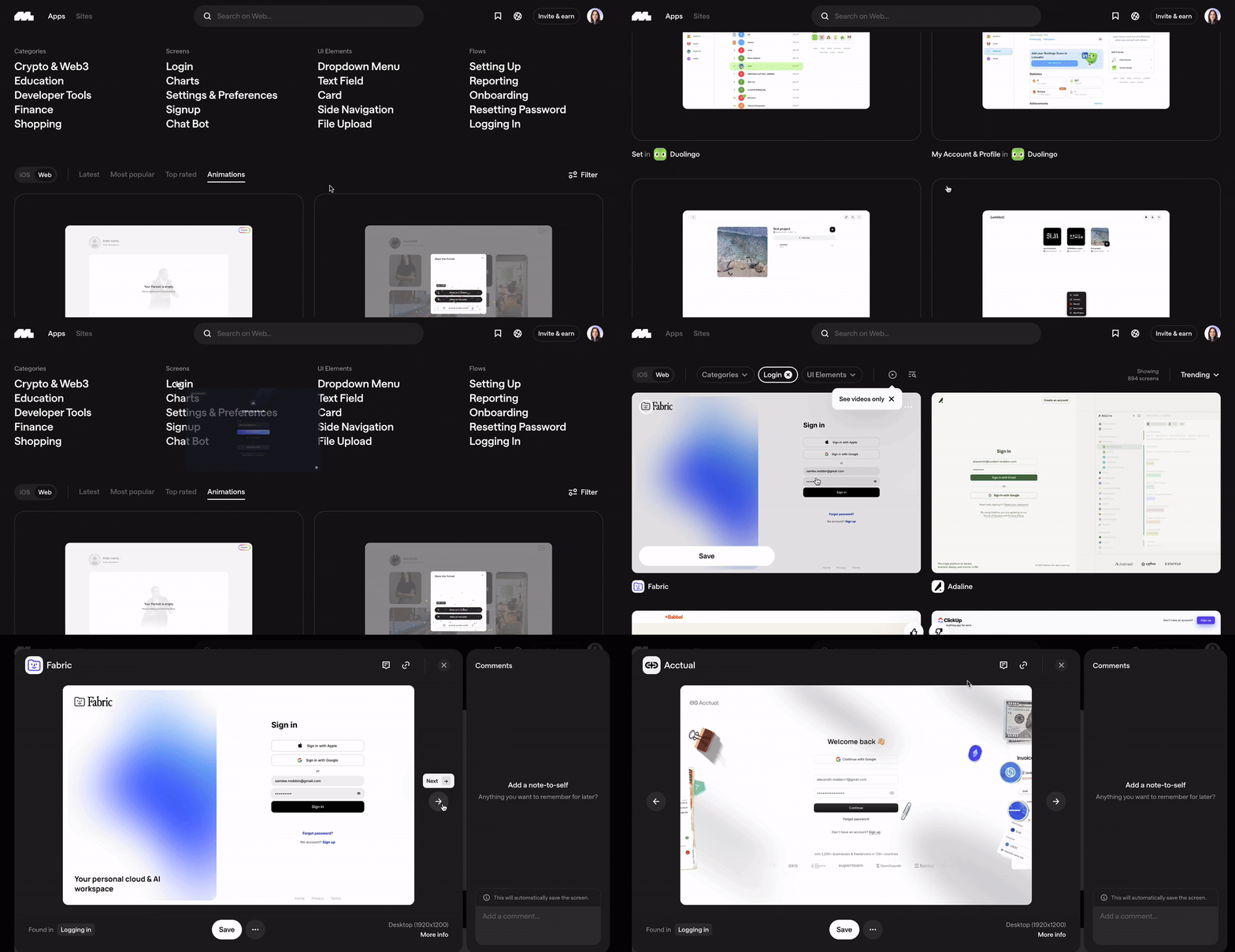
When I first met Jovin Liew (Co-founder & Head of growth), I was genuinely fascinated by how Mobbin started — I’d never heard a story like that before. Just hear this:
Back in 2018, his co-founder, Jiho, was building his own mobile apps. He found himself constantly taking screenshots of mobile apps to study the best UI patterns. Every new project meant hundreds of screenshots, folders, and chaos.
To rein in the chaos, he created a Dropbox folder and organized screens into folders like ‘Onboarding’, ‘Signup’, ‘Checkout’, ‘Profile’, and ‘Settings’. One day, he thought — why not build a library so designers don’t have to do this ever again?
That simple frustration turned into Mobbin — a curated, searchable gallery of real product designs that now helps millions of designers, product teams, and builders worldwide find inspiration in seconds.

Now, after 7 years of bootstrapping, the results speak for themselves:
2M+ registered users from teams like Airbnb, Pinterest, Uber;
25+ people in a team;’
500,000 screens and flows from 1000+ apps.
TOP-3 challenges we started with
After I talked to the team, I noticed that all the product issues and growth challenges lay in one of these 3 buckets:
Bursty usage pattern → high churn:
Users engage intensely for short periods, then disappear for weeks. Reverse trials and monthly plans amplified churn, especially in the B2C segment.Invitee → team onboarding gap:
The biggest growth opportunity lies in converting invited users into active, paying team members — but current flows are fragmented and under-optimized.Core experience bottleneck:
Search and filtering issues limit activation and retention; without improving the core “find what I need” experience, personalization and onboarding fixes won’t stick.
They came to me to help them figure out how to fix that. Here’s what we did next 👇
What we did in a 2-week Onboarding Sprint
First, let me tell you what an Onboarding Sprint is, and how I started doing this. Since I left Miro 2 years ago, I have been helping companies with various Product-led Growth challenges and have noticed a pattern: 90% of the leads I get have a major problem with Onboarding, so their activation is very poor.
Since then, I have run dozens of “onboarding audits” for the clients using my signature 5-step Growth Framework. However, I was missing real teamwork in that format, and this inspired me to turn it into a full 2-week Onboarding Sprint.

Mobbin was open to exploring this format with me, and we started our hard teamwork for the next couple of weeks. Here’s what it looked like 👇
Step 1: User Flow Steps: Data-informed Analysis
After I collected and analysed the inputs from the team (key challenges for ICP, previous user, data research insights, and more) — I’m ready to put myself in the shoes of a user and walk through the entire flow by myself.
This was the most exciting part for me (and for Mobbin), because it opens eyes on blind spots that were not visible before, and highlights first ideas.
I usually create a series of Loom videos, and the onboarding analysis can take ≈ 1 hour — so the team can pour some tea and watch the same evening instead of a Netflix show ☕️
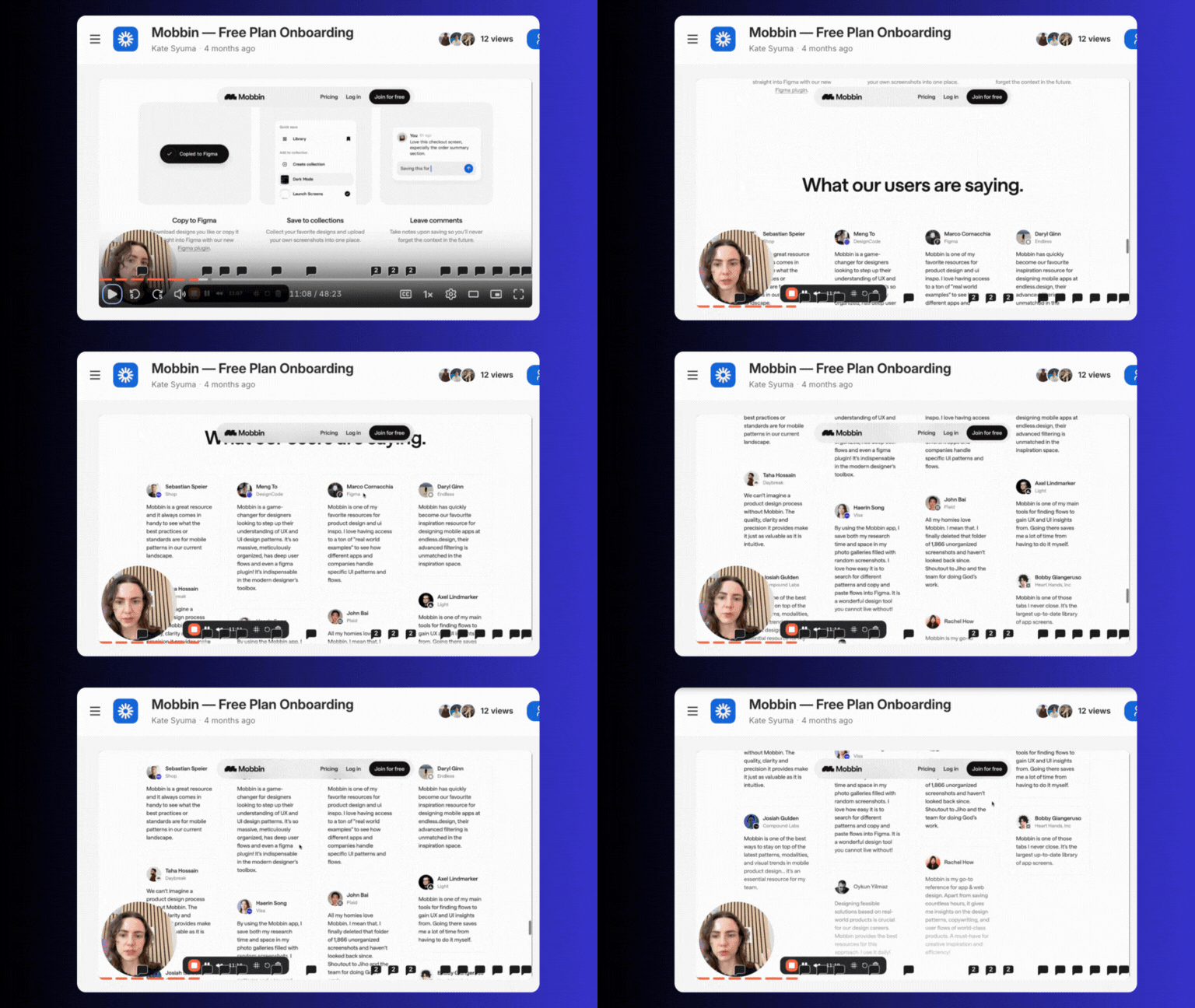
If you’re familiar with my framework “6 steps of Holistic Onboarding”, it’s not a surprise that we have to look at everything from Search, Website, till the moment when users (or teams) experience the core value and build a habit around it.
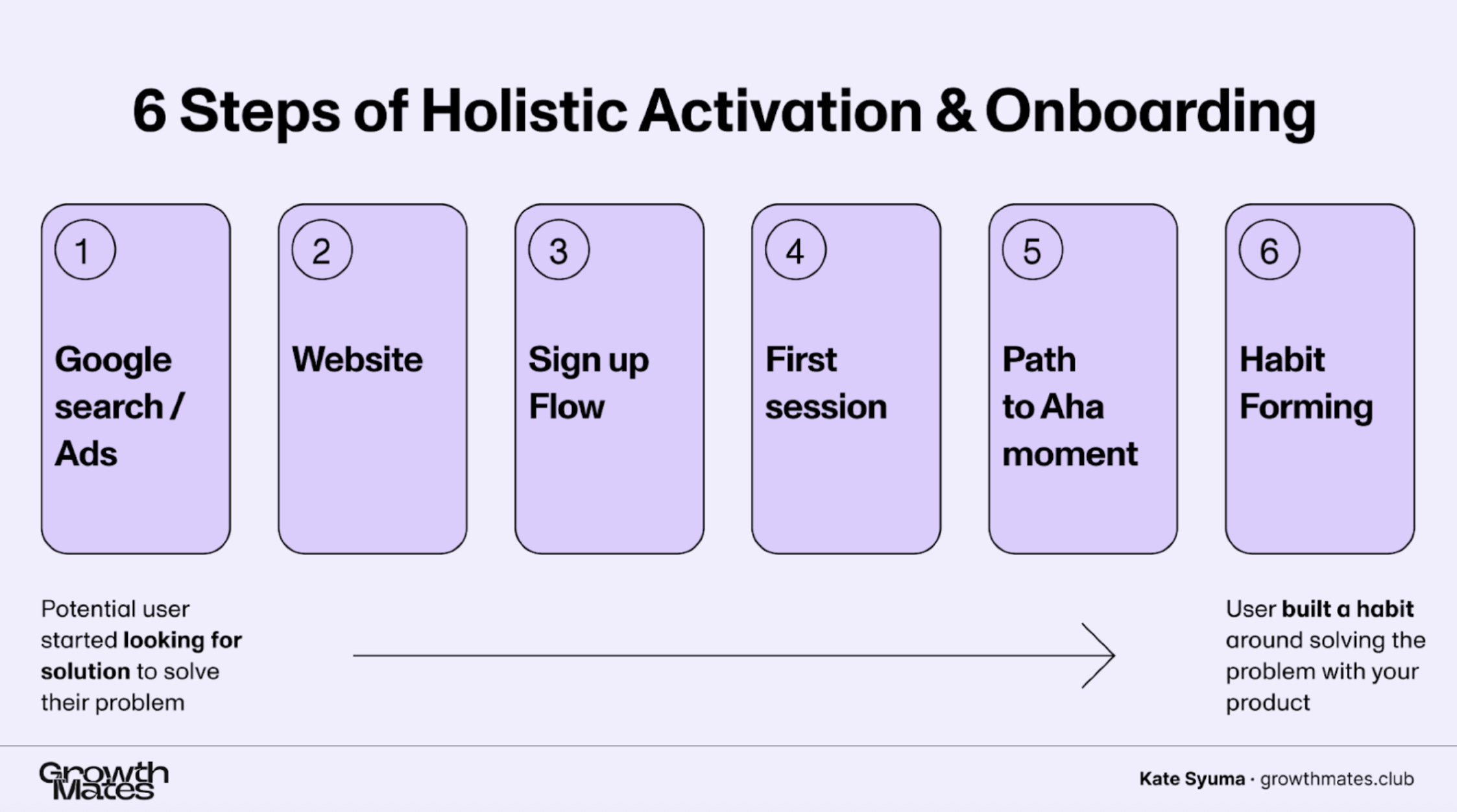
But instead of following high-level steps, I decided to look at 7 particular steps that were connected to team challenges with Team activation and a unique freemium business model, where it’s hard to provide significant value for activation:
Search & website
Sign-up flow
First session
“Free → Paid Team” Upgrade
Creating a collection, adding a team member
Team Joiners Activation
Emails analysis
Step 2: Applying the 5-step Framework for Onboarding Analysis
If you haven’t seen that before, 5-step Growth Framework is the signature approach that I developed after working on growth at Miro for 6+ years. My main intention was to connect “Business thinking” + “User-centricity” and turn this into a scalable approach.
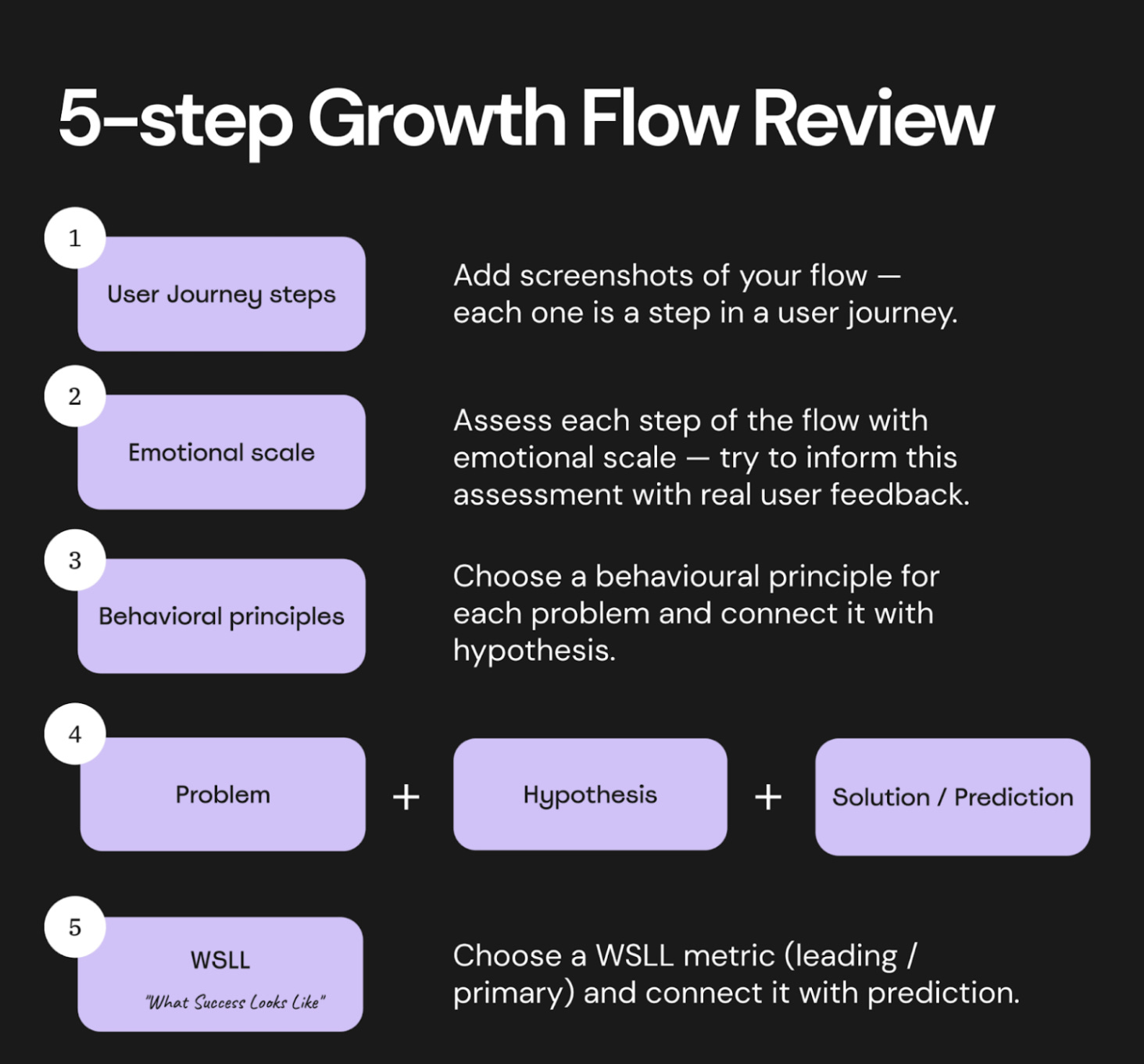
After I applied this to 7 steps of Mobbin journey (Search & website → Sign-up flow First session → Upgrade → Creating collection, etc.), we had this holistic view with plenty of ideas and hypotheses to prioritise.
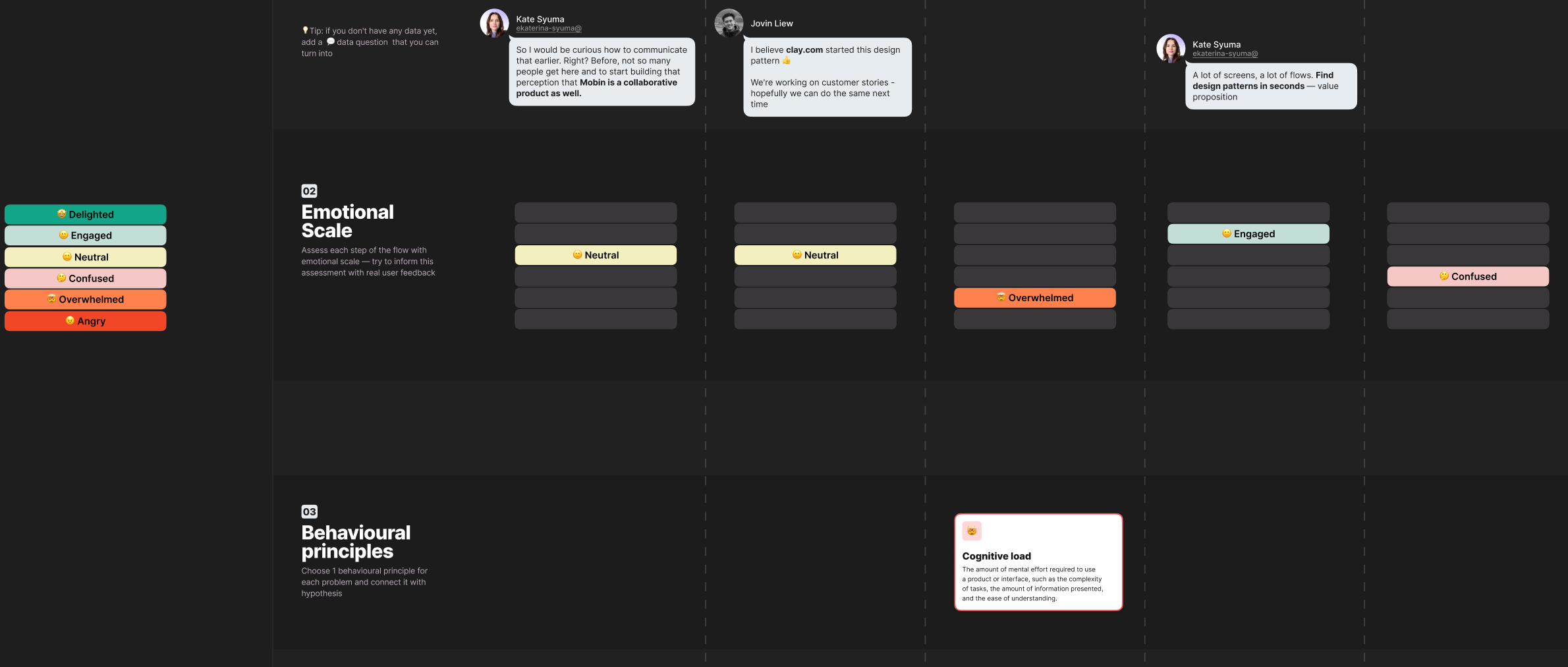
My favorite part is a collaborative analysis with the team when we analyze data, user research insights, and emotions. My job here is to put myself in the shoes of a user and make sense of those emotional observations.
I love using behavioral principles — this will help us uncover the most painful moments in the journey and start fixing them.
Step 3: Summarizing ideas for Growth Roadmap
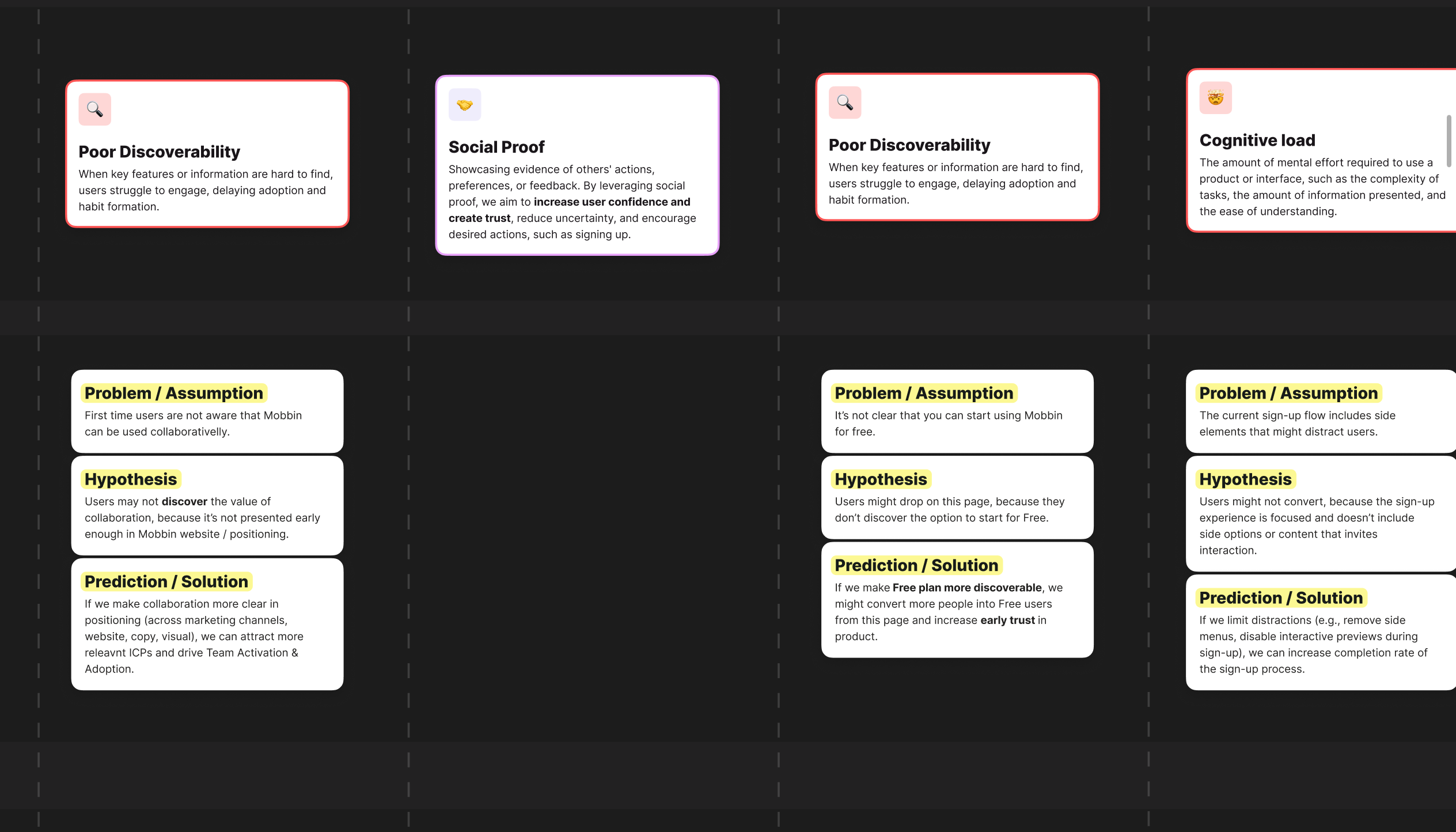
After the complete analysis, I connect “Problem - Hypothesis - Solution /Prediction”. Here’s a simple formula for that:
Problem: User can’t do [action] or achieve [desired outcome]
Hypothesis: We believe [problem], because [data/feedback]
Prediction / Solution: If we [change], it can improve [impact]
🚀 Extra mile: Collecting References. This is my favorite part. If you follow Growthmates, you know that for years of creating this newsletter, I collected 100+ flows, best practices, common mistakes, and now each client I work with gets access to this private knowledge base, aka “Kate Syuma GPT” :).
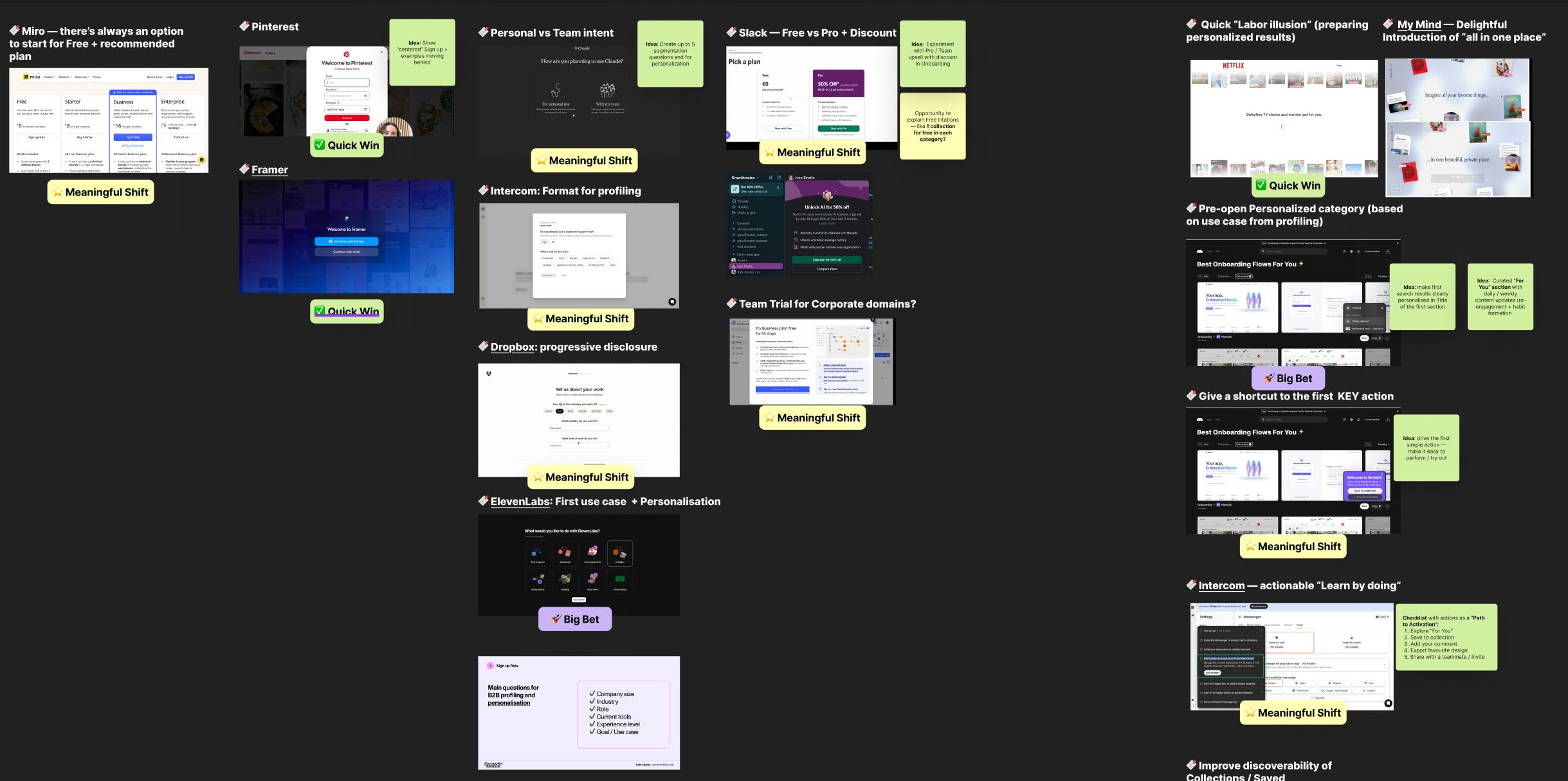
In this project with Mobbin, I added concrete references from 15+ products like Loom, Framer, Miro, Intercom, Mymind and more fantastic SaaS to inspire teams in many directions of solutioning.
Lastly, we need to prioritize all these predictions / solutions using a quite comprehensive framework that I automated on Notion with 10+ parameters.
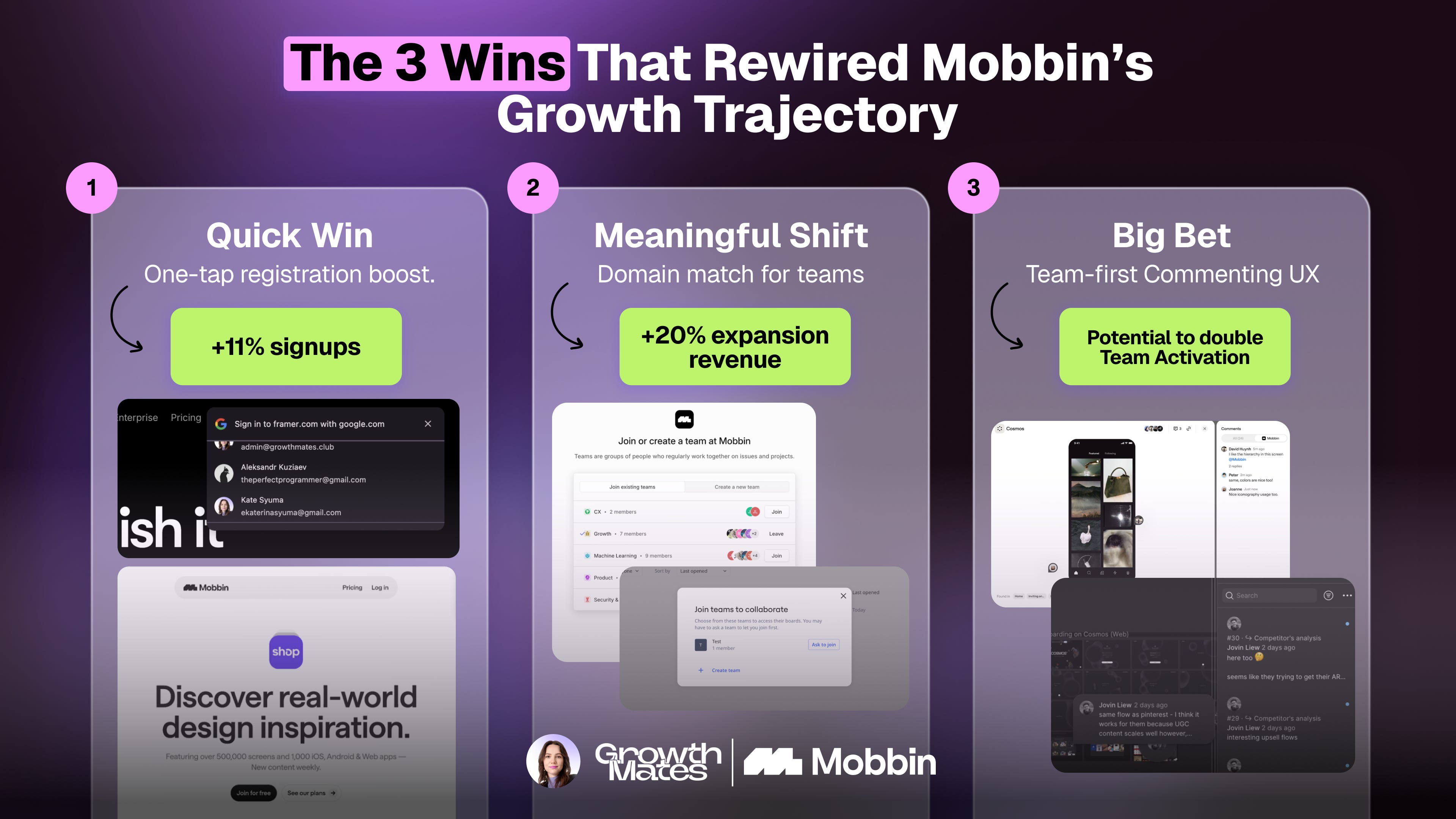
Now, let’s dive into 3 key initiatives that the team implemented to drive +11% in signups and +20% in seat expansion revenue 👇
3 wins that drove Mobbin Growth (+ real impact)
Next, we will talk about 3 initiatives — each of them represents one of these buckets:
Quick Win – a clear problem with a known solution. Low risk, builds on existing systems, gives fast results.
Meaningful Shift – a known problem that needs more research. Medium to high complexity, but still builds on what we have.
Big Bet – a high-impact project that might solve a known problem or reveal a new opportunity. It needs deep research and validation before moving forward.
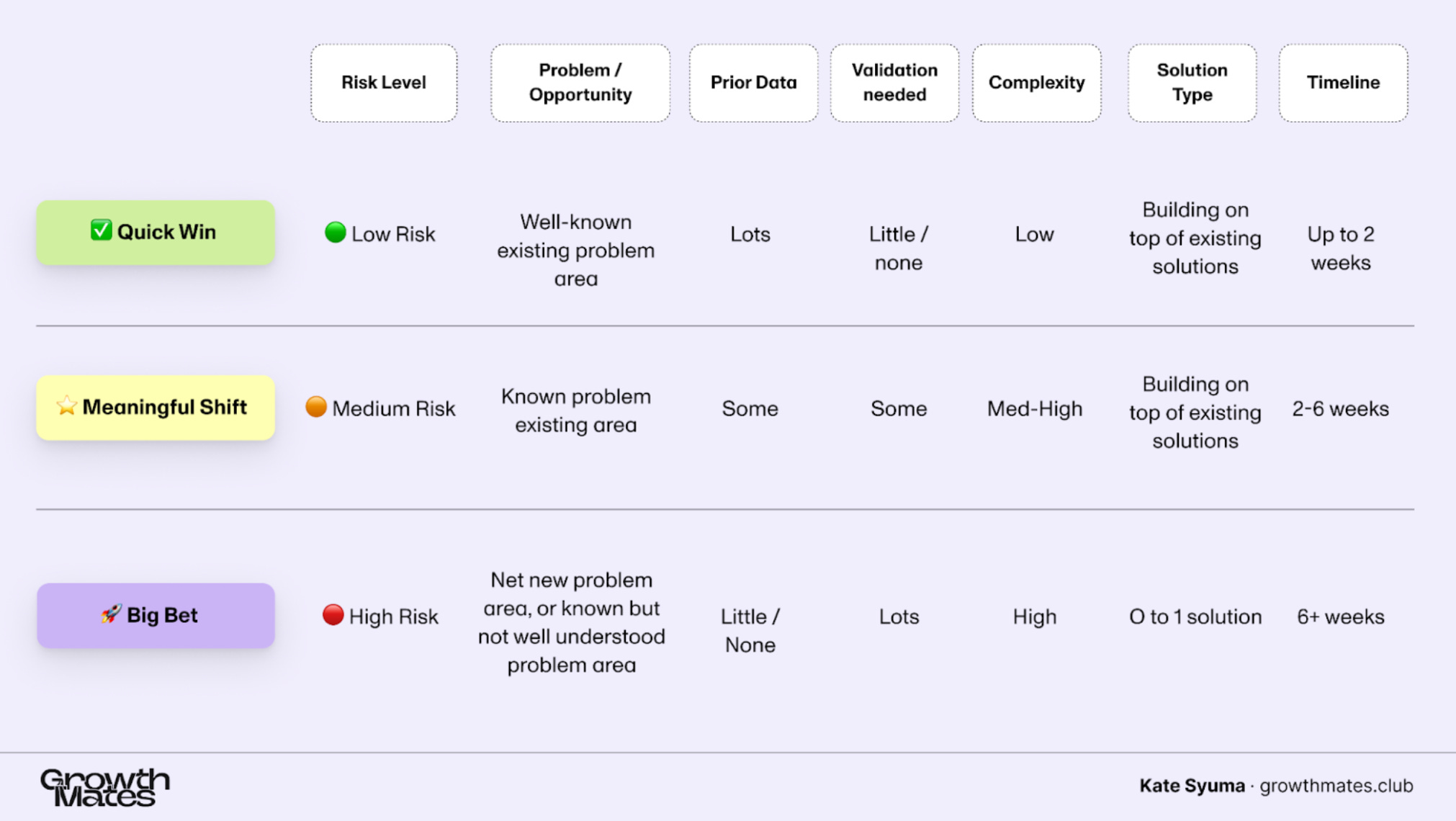
I always suggest my clients to diversify their Growth Roadmap and test different ideas — let’s see how Mobbin did that 👇
1. Quick win ✅: “Google” Sign-up
👉 Problem: When users opened Mobbin links (home page, screens, or flows), they didn’t register — a common problem with website drop-off. Imagine you’re opening a website or another page, and there’s no obvious way to sign up. This is a HUGE traffic source, but the CR was low.
👉 Hypothesis: Users don’t create Mobbin accounts because they lack motivation and don’t see the value of the full product.
👉 Solution idea: If we nudge more motivations (e.g. reply to a comments, get more access) and add “Google One Tap” to register, we can increase CR to registered users. For example, Framer was already doing that.
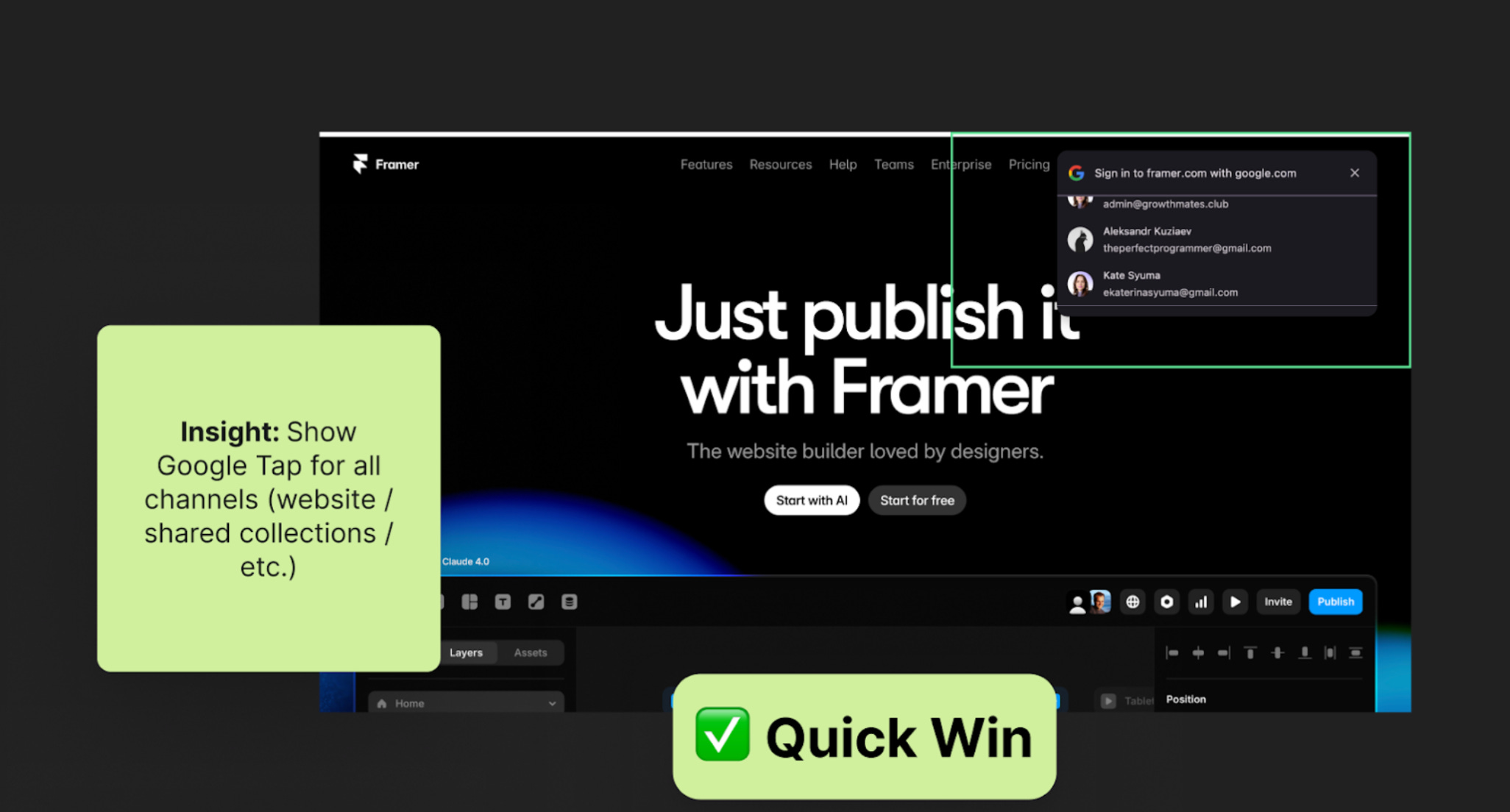
👉 WSLL / metric: # of Accepted Invitations
👉 Mobbin solution: Applying “Google One Tap” on the Mobbin website for fast registration.
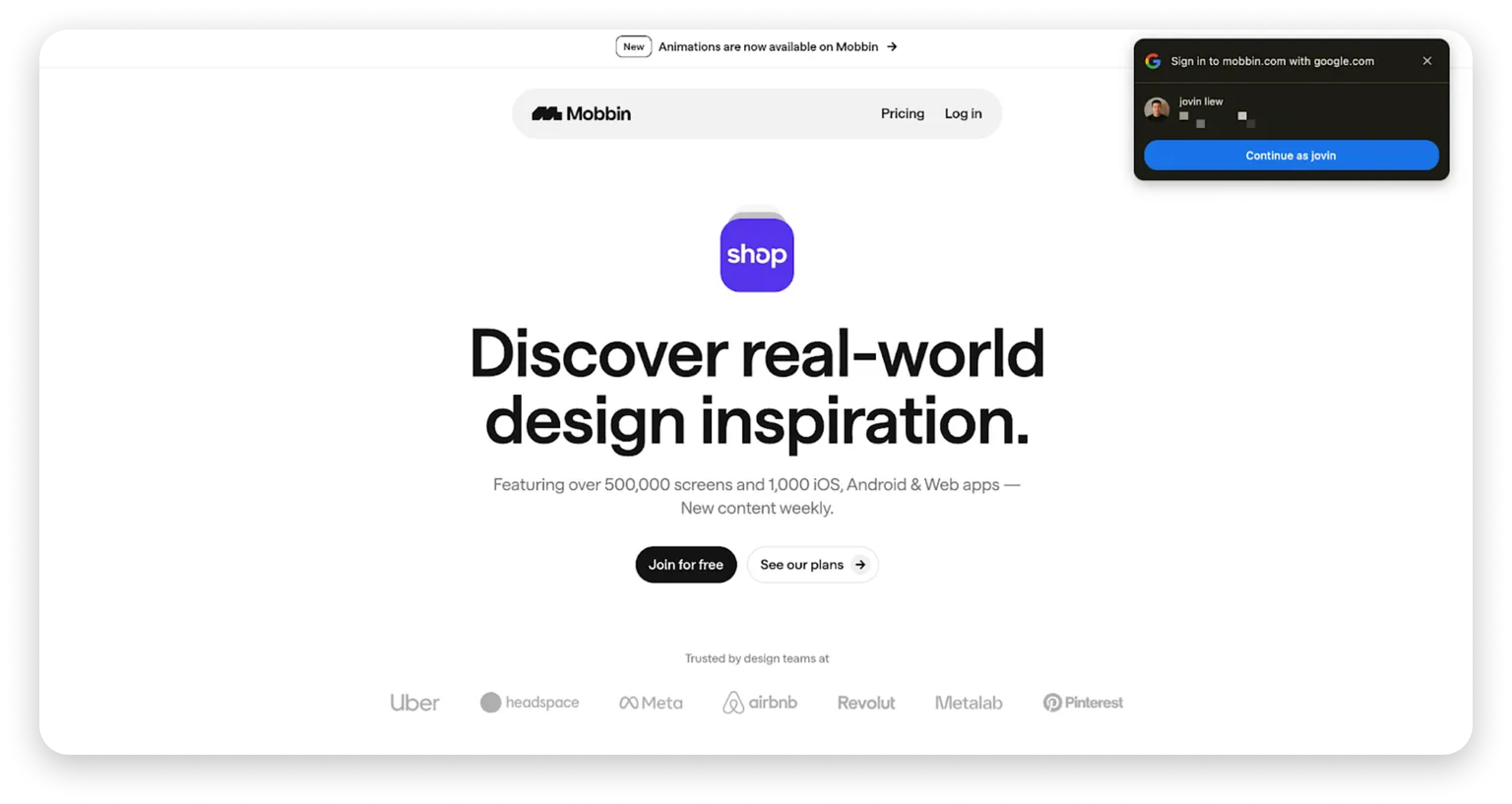
👉 Results and Impact: +11% increase in signups, statsig in 3 days. That was an incredibly fast win.
👉 Key Learning: No surprises here, reducing friction helps increase conversion rates! Many larger companies were already doing this as well (like Pinterest, Reddit, and more). Google has documented some case studies here if you’d like to learn more.
2. Meaningful Shift ⭐️: Domain match for early Team activation
👉 Problem: Larger organizations had multiple teams on Mobbin. However, new designers or PMs don’t know about them. This leads to them subscribing to Mobbin on the Pro plan and paying for it out of their own pocket since they aren’t aware.
👉 Hypothesis: By matching domains, we could show new users existing team plans while allowing admins to keep full control of who gets to join a workspace. This might increase the number of invites and increase overall conversion to better retain team/enterprise plans.
This will also help admins better gauge demand on Mobbin as a tool and better forecast spend and budget.
👉 Solution idea/reference: We took references from other seat-based subscription apps like Linear, Notion, and Miro to figure out how to contextualize it to Mobbin.
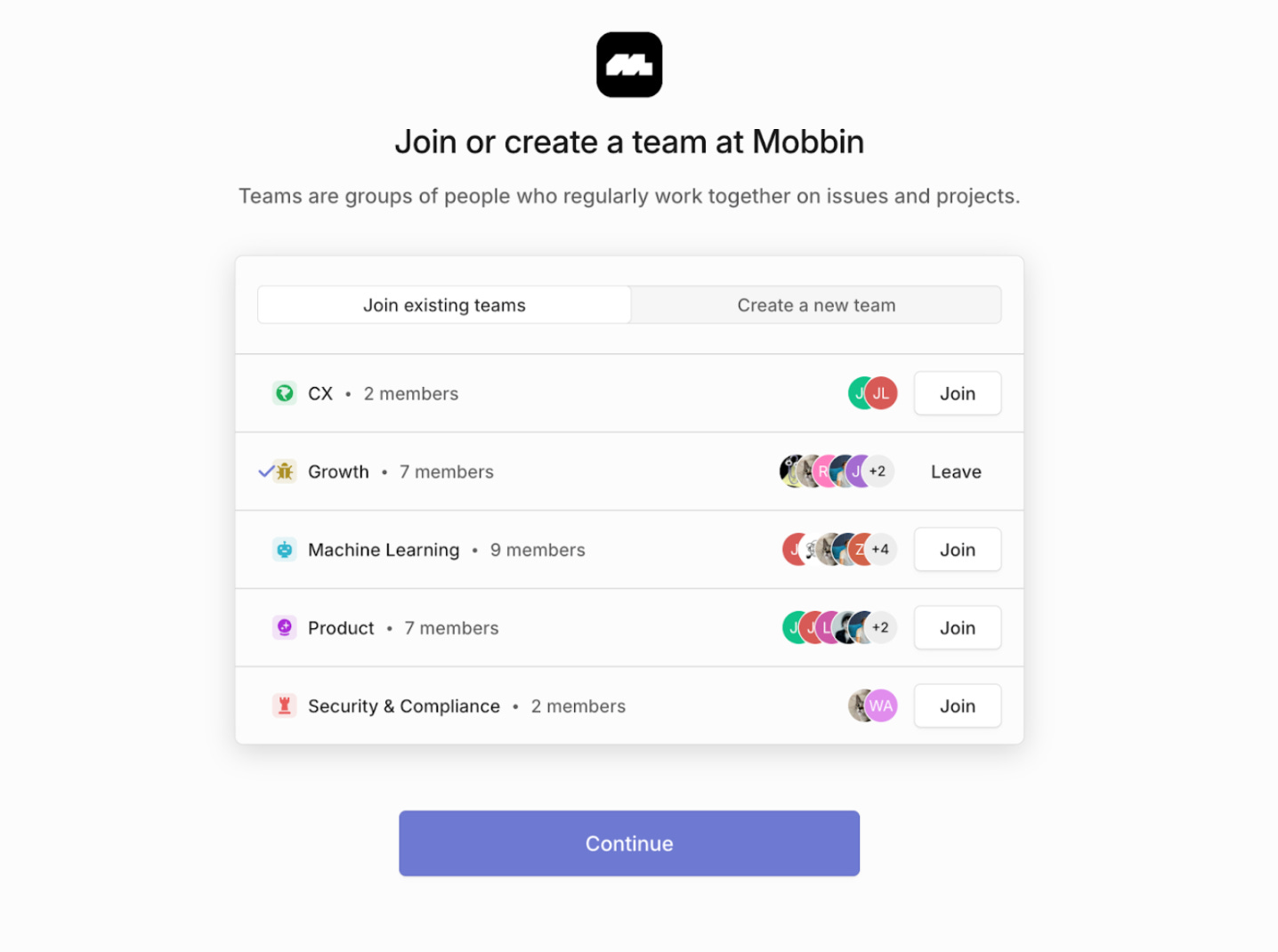
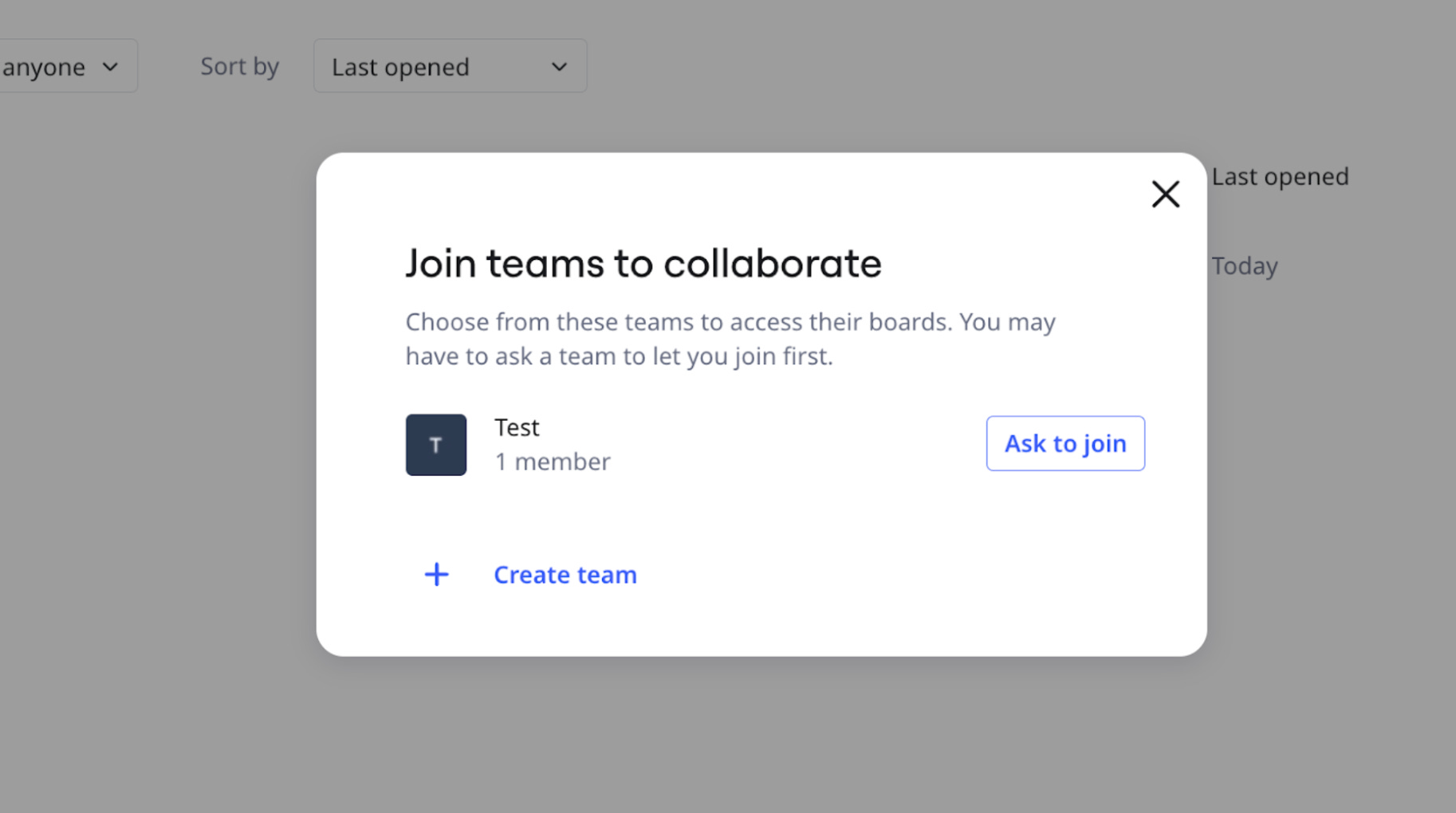
👉 WSLL / metrics results:
50% increase in team invitations sent (note: not all invitations might be approved)
~20% increase in accepted team invitations
~20% increase in seat expansion revenue
P.S. Kudos to Jurn van Wissen from Veed.io was advising Mobbin and first introduced this idea. When I collaborated with Mobbin, I pushed the team to prioritize this as I had seen this worked well at Miro and other multiplayer products I always keep on my radar.
👉 Mobbin solution: Enabling users to discover and join their team.
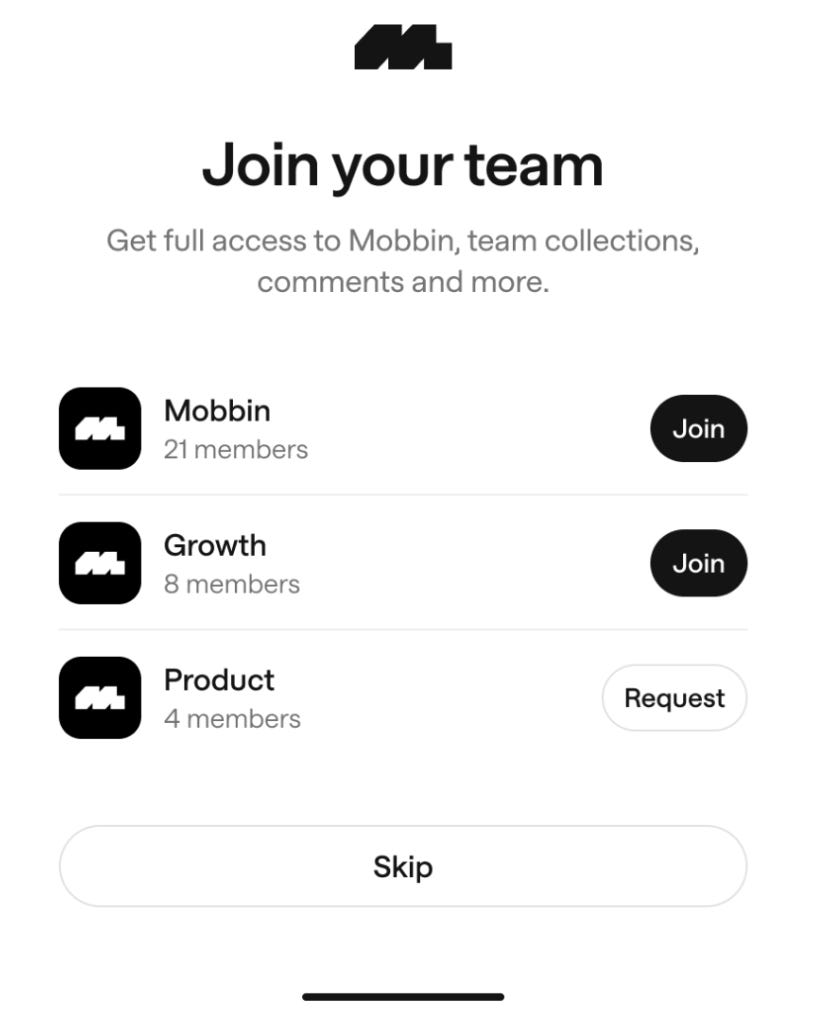
👉 Key Learning: Mobbin is reaching a point where teams are reaching out to ask how many users are actively using the product. Having a domain match helps to increase visibility for organizations on both the end user and the procurement side - bridging the gap between demand and budget.
Based on the success of this experiment, the team is exploring more follow-up tests to drive more growth in seat expansions.
Additional flow: Request a seat for joiners
👉 Problem: Introducing a domain match creates a potential issue for team admins or procurement teams that are under strict budget constraints. We needed a way to allow admins to be in full control of who gets a seat and who doesn’t.
👉 Hypothesis: Having a request flow will allow the domain match to work without having to worry about causing billing issues.
Imagine this as an extension of the original idea with “Domain match”, covering more use cases and increasing reach to more users.
3. Big Bet 🚀: Repositioning mobbin to be focused more on B2B
👉 Problem: Mobbin needed to encourage more customers to purchase the tool from the organization (B2B) level instead of paying out of their own pockets (B2C) as the B2B customer segment is a lot stickier and retains well.
👉 Hypothesis: My hypothesis was that Mobbin can reposition to be more of a B2B tool compared to its current B2C positioning. By doing so, they can attract more customers at the organization level, which may result in better retention rates and higher ACVs.
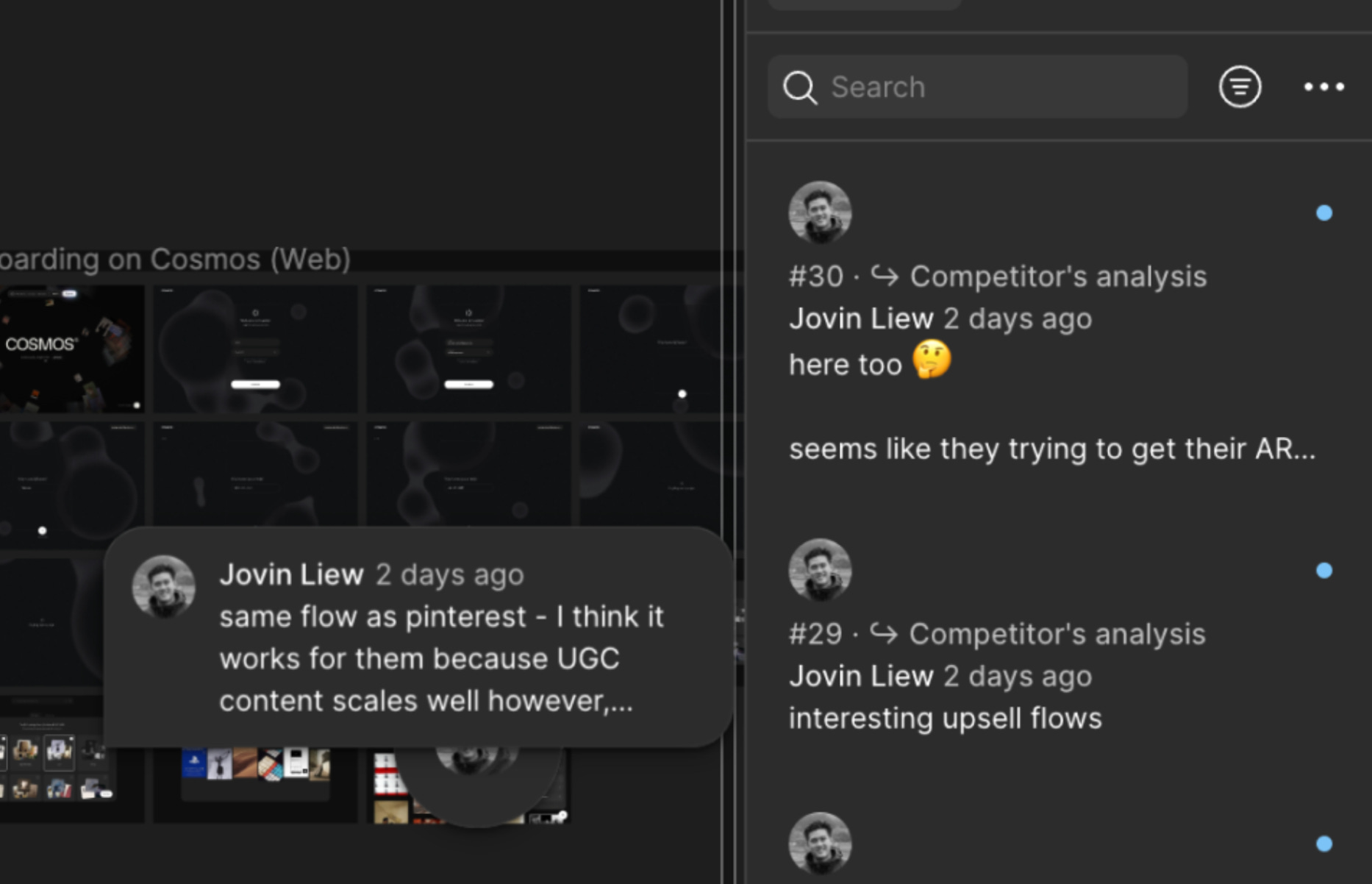
👉 Solution idea/reference: I suggested Mobbin to improve commenting UX to be Figma-like and introduce more team plan features to increasingly shift more focus to the B2B front. Other suggestions, other than better comments UX, include having B2B focused testimonials instead of individual quote tweets + emphasizing invites during onboarding.
👉 WSLL / metric (still in progress):
% conversion rate to team plans
% expansion revenue
👉 Mobbin solution:
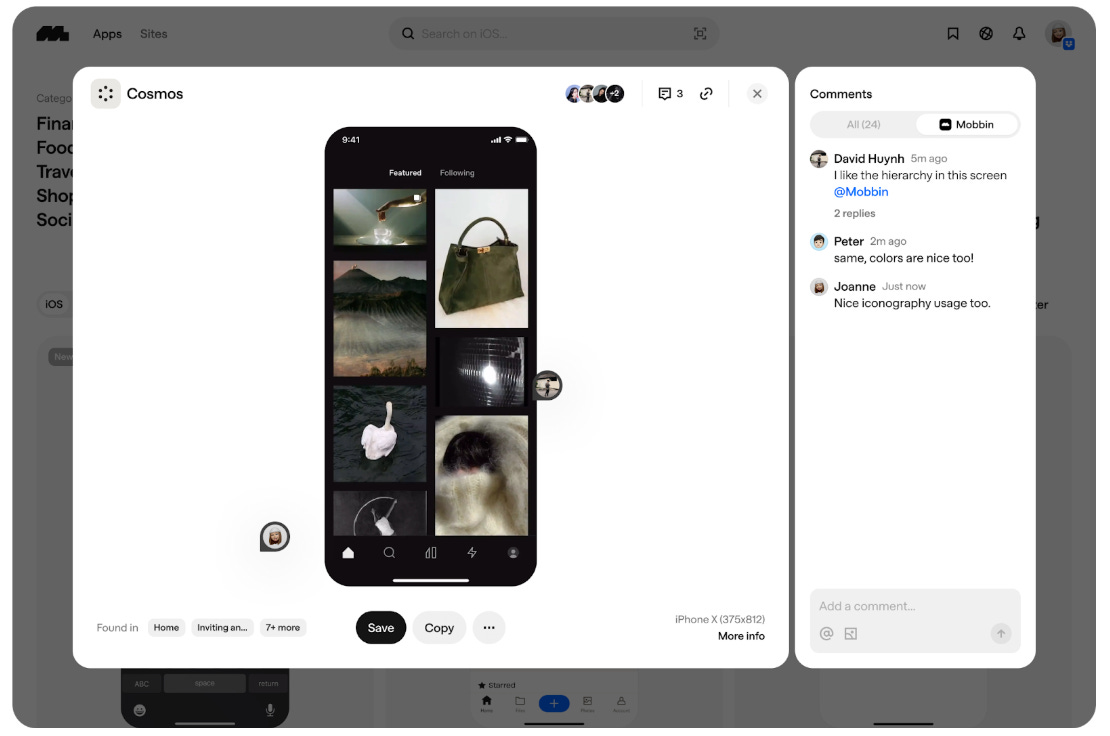
👉 Potential Impact: In 2026, the team is planning to continue that big bet and see how core changes with commenting UX help deepen the adoption. My previous experience shows that affecting core UX in a positive way can lead to 50% to 2x increase in Activation rate, so I have a positive feeling about that.
⭐️ Summary — What you can apply tomorrow:
Ship one quick win first: Start with the lowest-friction unblocker: add Google One Tap (or any 1-click auth) and nudge motivation directly on your key landing pages.
⚡️ A fast way to lift signups without touching deeper onboarding.Build flows for multi-player activation: If your product has any team use case, implement a domain match (or the simplest version of it) to reveal existing teams instantly.
⚡️ This one change often drives more invites, better team visibility, and early seat expansion.Invest in one “big bet” that shifts your positioning: Look for a core experience gap that, if fixed, would move you closer to the segment that retains better (like B2B vs B2C).
⚡️ In Mobbin’s case — making collaboration/commenting more powerful.
Need help with your Onboarding & Activation?
If this teardown resonated, I run a focused Onboarding & Activation Sprint where we analyze your sign-up flow, first session, and early value moments to pinpoint exactly where users drop and why.
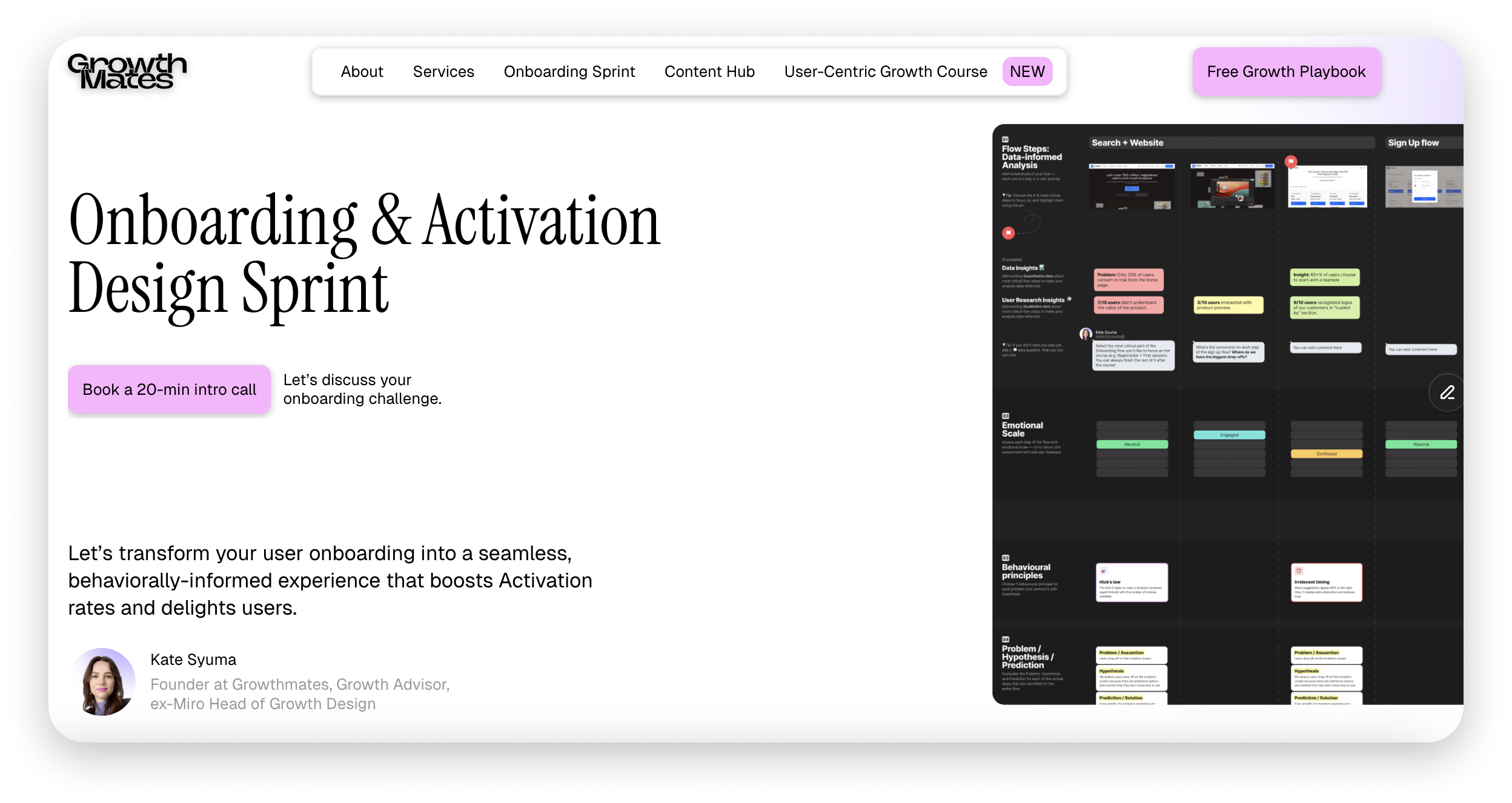
You’ll walk away with a clear list of activation blockers, prioritized fixes, and the 1–2 product moves that can shift your numbers fastest.
⏰ I have one slot open for Q1 — reach out if you want to go through this process together.
🤝 More ways I can be useful to you:
User-centric Growth Course — 6/10 discounted spots left for January ❄️.
If these frameworks sparked new ideas — imagine working through your actual product challenge with my feedback, templates, and a dedicated community (AI will be there as well). This week, you can save 150$ for the enhanced program.
👉 Join with 150$ off → (promo “growthmates” for dear readers)
Brand Partnerships 📩
Let’s tell your product story to a trusted audience of 29,000+ product, design, and growth leaders — and co-create meaningful content that inspires the wider product and design community.
👉 Request content partnership: hello@growthmates.club
Premium Edition 💎
If you’re getting value from this newsletter, there are more frameworks, teardowns, and exclusive content on PLG, Activation, AI, and how to build meaningful products that delight users.
👉 Upgrade to Premium and get full access.
This is all for today, dear readers. If you found this helpful — please share your reaction and leave some comments 💜 It would give a huge support for me to continue creating this!
If you find this newsletter valuable, share it with a friend, and consider subscribing if you haven’t already. There are some discounts available, and maybe you can expense this :)
Connect with me on LinkedIn and learn more about my work on Growthmates.club.
With best regards,
Kate Syuma